
Brush Molding
Brush bodies - from household cleaning tools to industrial brushes - combine bristle tufts, metal components, and plastic handles. Vertical injection molding holds bristle inserts in position during clamping, producing durable, assembly-ready brush products.
DA Series vertical machines can be reviewed for brush molding. Slide table configuration is commonly considered when bristle or insert placement needs accessible loading outside the clamp area.
Application Overview
Brush molding with vertical injection machines
The process
Bristle tufts, metal ferrules, or handle cores are placed into the lower mold. The vertical clamp closes from above, holding the inserts in their cavities. Plastic is injected around the inserts, forming the brush body, and after cooling the finished brush is ejected.
This eliminates secondary bristle-setting and handle assembly - the brush body, bristle anchor, and grip are produced as a single integrated component in one molding cycle.
Why vertical clamping for brush production
Bristle tufts are flexible and unpredictable - they don't stay put like rigid metal inserts. Vertical clamping and accessible mold loading work together:
- Slide table moves the lower mold out for operator placement of bristle tufts
- Gravity holds tufts in their cavities while the clamp closes from above
- Metal ferrules, threaded inserts, and handle cores remain in position
- Overmolding soft-grip handles in the same cycle for complete brush assembly
Common Challenges
Production challenges in brush molding
Bristle handling, insert placement, and product structure all affect the right machine choice - each brush type presents different production requirements.
Product structure variation
Brush designs vary widely - toothbrushes, paint brushes, industrial brooms, cleaning tools - each with different bristle types, body geometries, and insert requirements. Machine configuration must match the specific product structure and bristle anchoring method.
Slide table workflow for bristle placement
Bristle tufts must be placed accurately and quickly. Slide tables move the lower mold out for ergonomic loading - the operator places tufts, confirms position, and the table returns to the clamp area. Double slide tables can further improve throughput.
Customization for non-standard requirements
Special brush geometries, multi-material handles, or automated bristle feeding may need custom machine configurations. The engineering team can discuss custom platforms after reviewing product design, bristle type, and production targets.
Configuration Review
Recommended machine configuration for brush molding
Starting points - final selection depends on brush design, bristle type, mold layout, and production volume.
Machine series
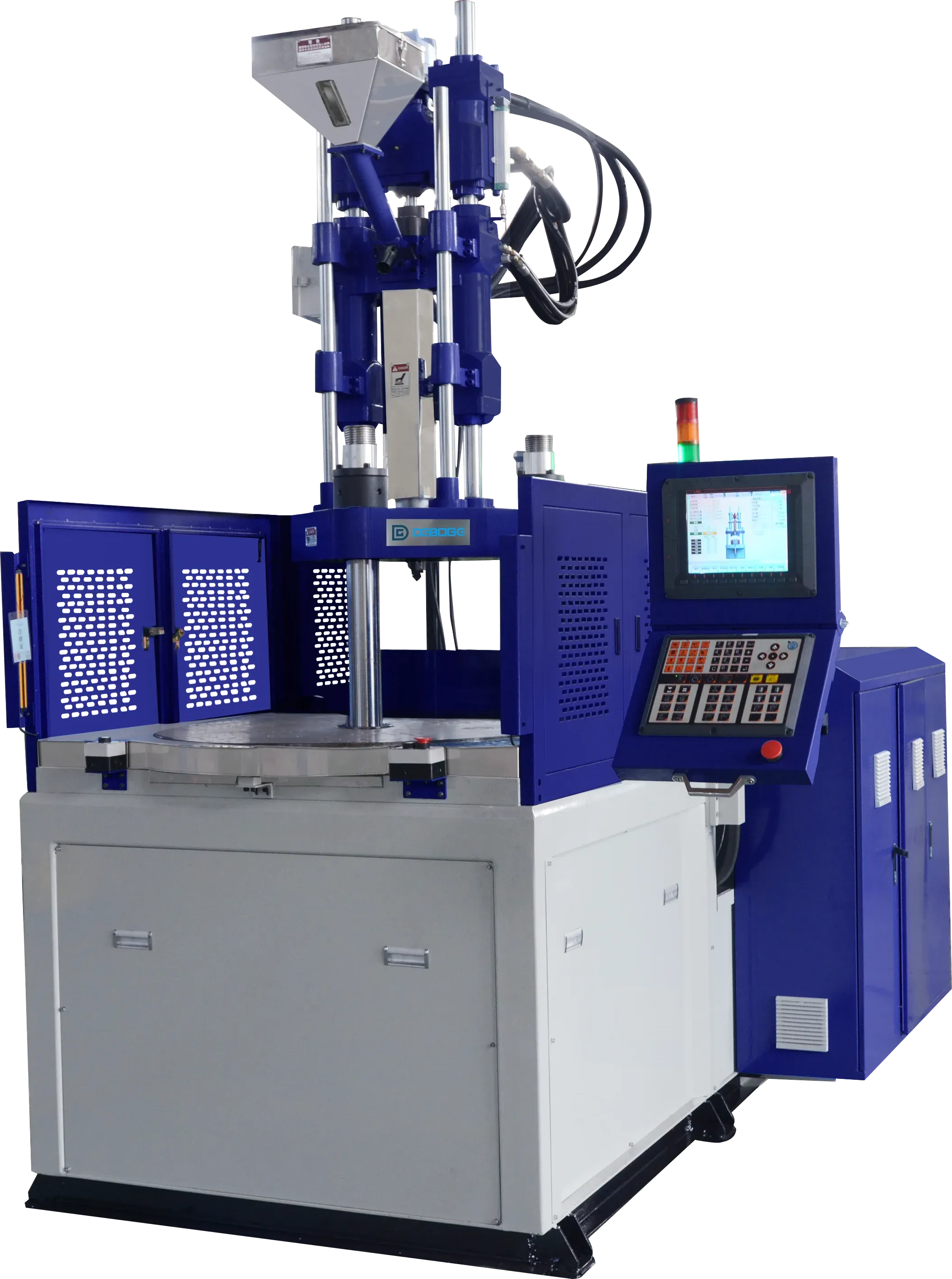
DA Series
Standard vertical clamping + vertical injection. Covers brush body, handle, and bristle-insert molding. Slide table or fixed platen. 15T-800T.
View DA Series →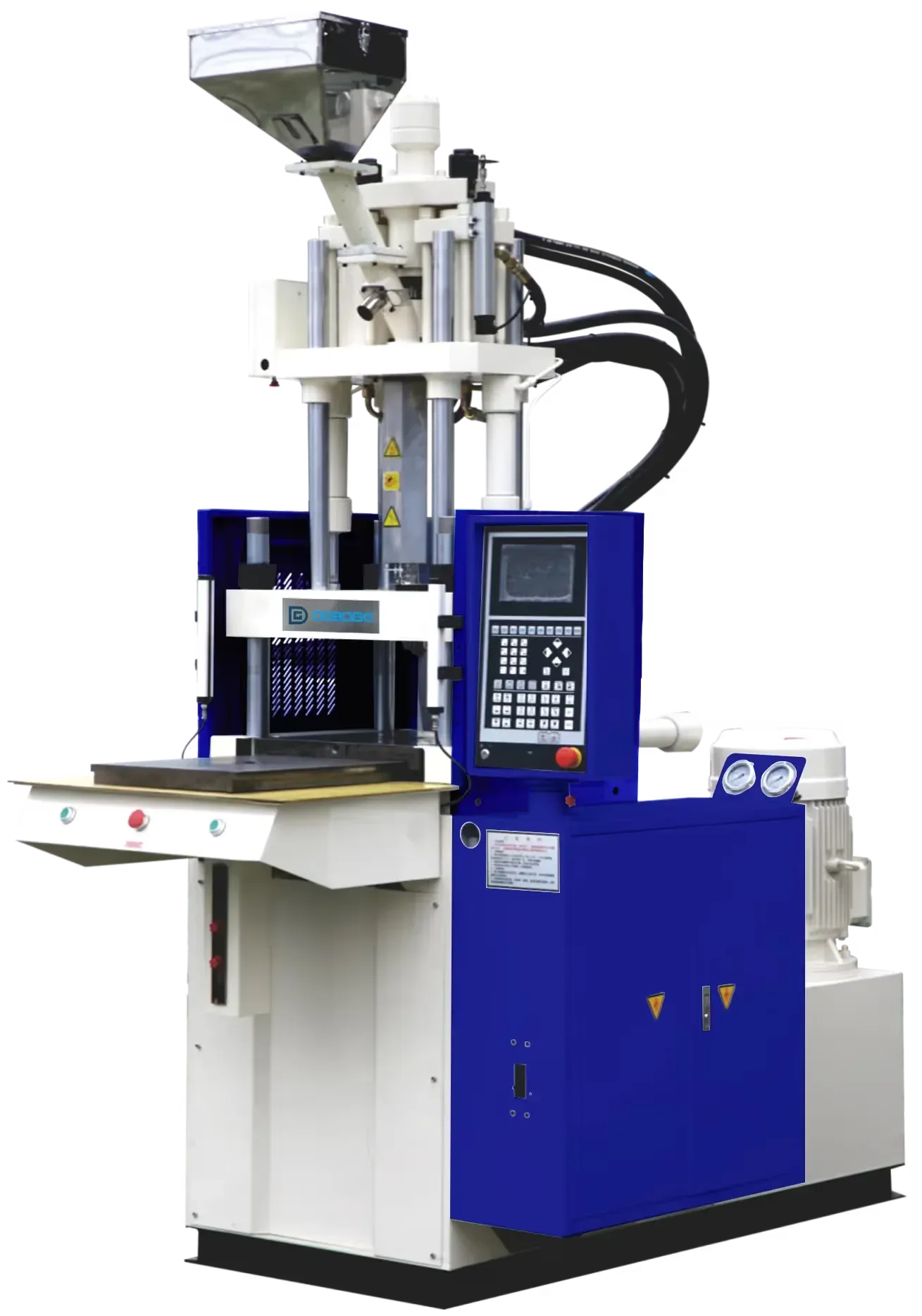
Table configuration
Slide table
Lower mold slides out for accessible bristle placement. Single or double slide - commonly preferred for brush production.
View Slide Table Machines →Machine size must be confirmed from project data - Review projected mold area, cavity count, material, brush body size, and insert layout before selecting tonnage.
Materials
Typical materials for brush molding
Brush body material selection balances durability, chemical resistance, grip comfort, and cost - each material type brings different processing characteristics.
PP (Polypropylene)
Most common brush body material. Good chemical resistance, cost-effective. Used for household cleaning brushes, brooms, and general-purpose brush handles.
PA66 (Nylon)
For industrial and heavy-duty brushes. Higher strength and heat resistance than PP. Glass-fiber grades for structural brush components.
TPE / TPU
Soft-touch overmold for brush grips and ergonomic handles. Bonds to PP and PA substrates. Common for toothbrushes and consumer cleaning tools.
ABS
For consumer brush products requiring good surface finish and color options. Common for toothbrushes, cosmetic brushes, and household cleaning tools.
POM (Acetal)
For precision brush components - sliding mechanisms, retractable brush systems. Low friction, good dimensional stability.
PET (recycled)
Recycled PET grades for sustainable brush products. Good mechanical properties, processable on standard vertical machines. Growing demand in consumer brush markets.
Products
Typical brush molded products
From household to industrial - these product categories represent common brush molding applications on vertical injection machines.
Household cleaning brushes
Scrub brushes, dish brushes, toilet brushes with molded-in bristle tufts and ergonomic handles.
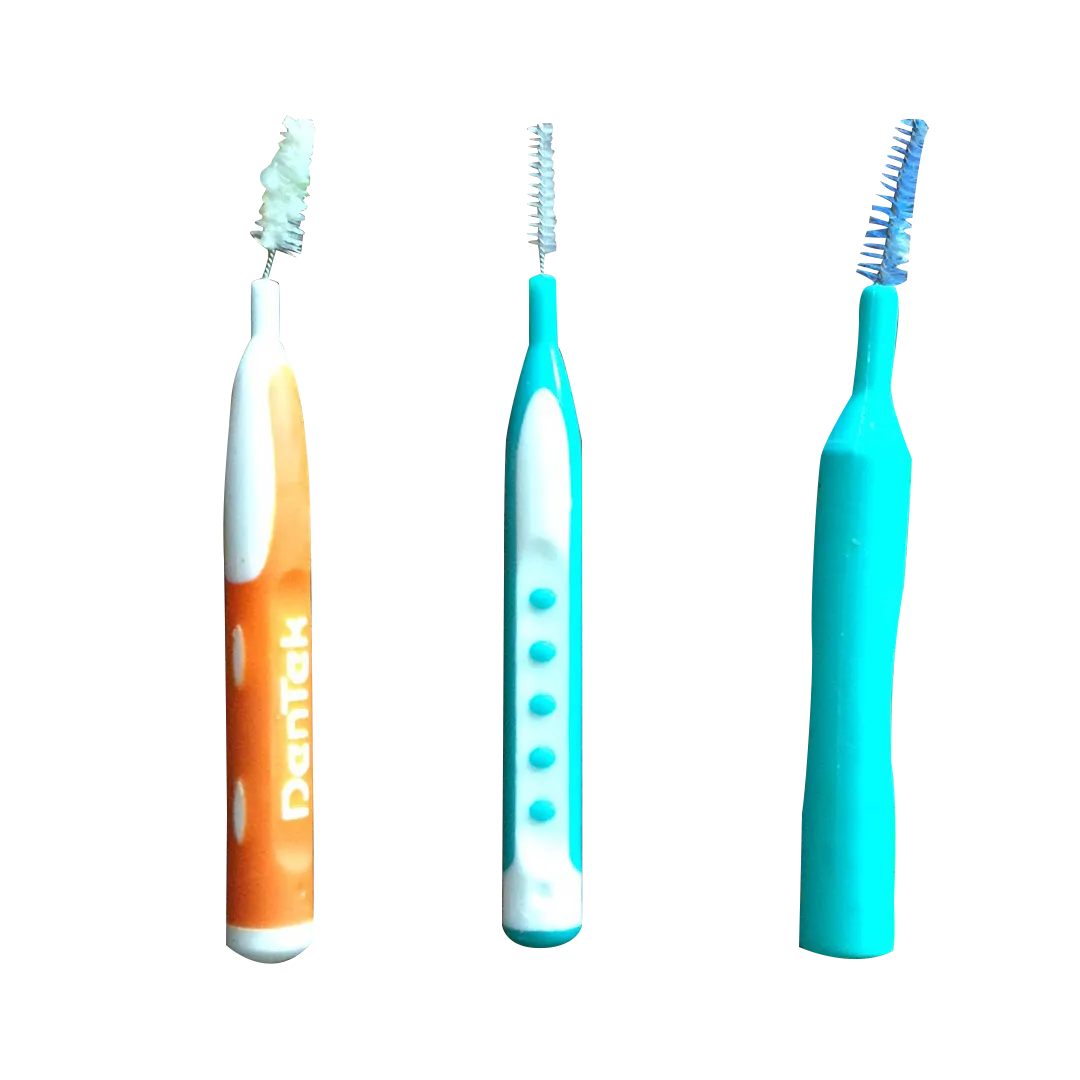
Personal care brushes
Toothbrushes, hairbrushes, cosmetic applicators with precision-molded bodies and bristle anchoring.
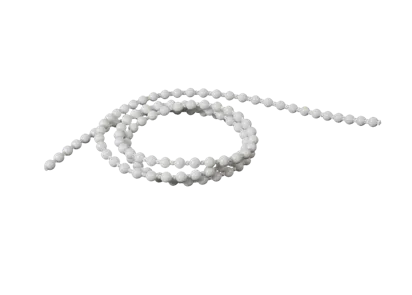
Industrial & specialty brushes
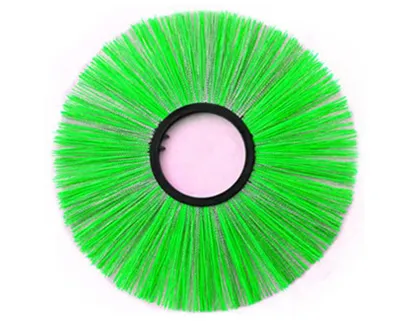
Heavy-duty brooms, street sweeper brushes, industrial cleaning tools with reinforced bodies.
Soft-grip handle brushes
Brushes with TPE/TPU overmolded grips - combining rigid body and soft-touch handle in one cycle.
Related Machines and Resources
FAQ
Brush molding - frequently asked questions
Why use a vertical injection molding machine for brush production?
Which table configuration is recommended for brush molding?
How should machine size be reviewed for brush molding?
Which machine series is commonly reviewed?
What materials are used for brush bodies?
Can a machine be customized for specific brush designs?
How do I discuss machine configuration for brush molding?
Tell us about your brush molding application
Discuss machine configuration for brush production
Send your brush design, bristle specifications, material, mold dimensions, and target production volume. The engineering team can review the project data and discuss a suitable configuration path.