
Common Machine Questions

Frequently Asked Questions

Find short answers to common questions about Deboge vertical injection molding machines, project preparation, applications, ordering, installation, and after-sales support.

34 questions 6 topic groups Short answers with next steps

Find the Right Answer

Browse questions by project stage

Choose the topic closest to your current decision. If the answer needs a longer explanation, use the related resources in the sidebar.

FAQ

Answers to common vertical molding machine questions

These answers are intentionally short. For machine selection, application review, or material-specific decisions, contact Deboge with your project details.

Machine Selection

Choose machine structure, injection direction, and table configuration for a vertical molding project.

Back to top
What types of vertical injection molding machines does Deboge manufacture?
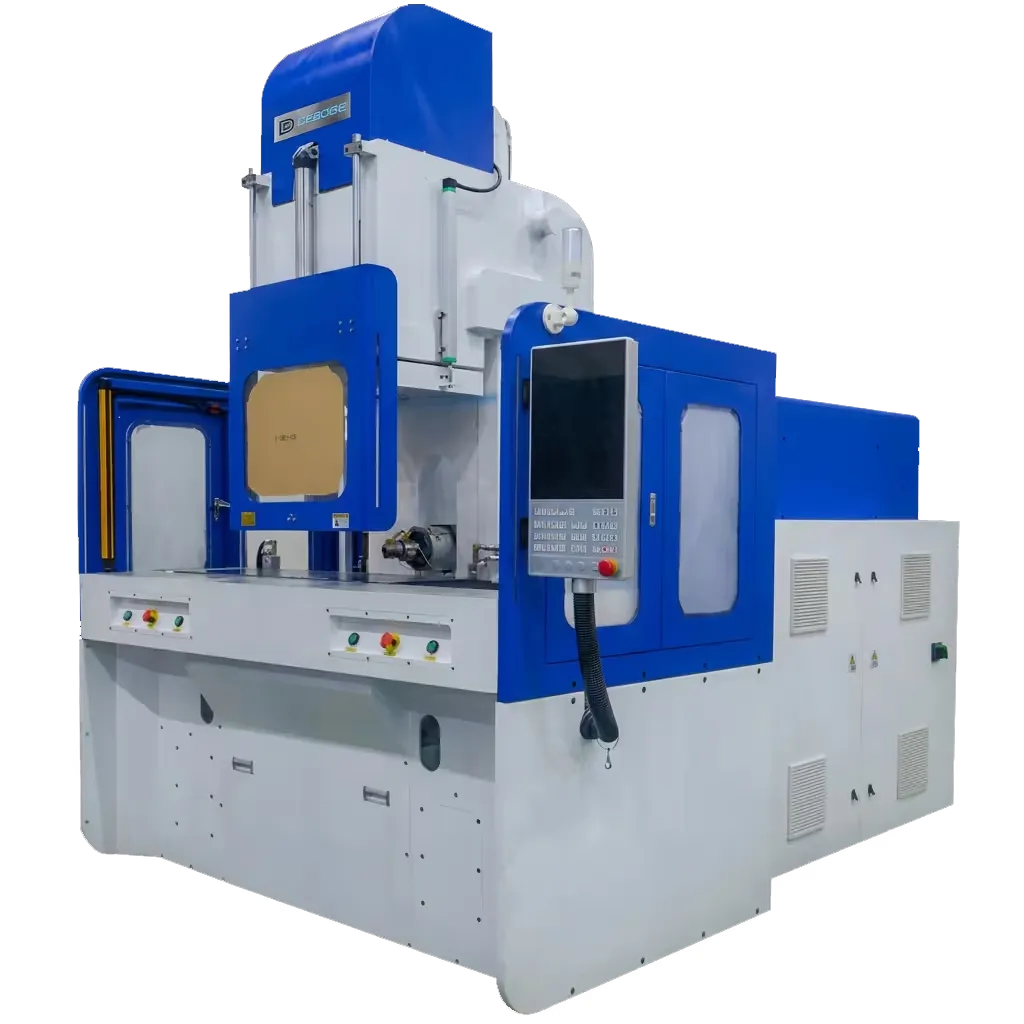
Deboge builds vertical injection molding machines around several structure choices. DA Series uses vertical clamping with vertical injection. DC Series means tie-bar-less vertical clamping, and the injection direction depends on configuration. DK Series uses vertical clamping with horizontal injection. Table choices include fixed platen, slide table, and rotary table layouts.
How do I choose between DA, DC, and DK series?
Start with the product, insert loading method, mold access, and injection direction required by the mold. DA is often discussed for standard vertical clamping and vertical injection layouts. DC is considered when open mold access is important. DK is considered when vertical clamping should be combined with horizontal injection. Deboge should review the actual project before confirming a structure.
Which table configuration is right for my application?
Use fixed platen when the loading and unloading workflow is simple. Use a slide table when the operator or automation needs better access outside the clamping area. Use a rotary table when loading, molding, and unloading can be organized around indexed stations. The right choice depends on insert handling, mold access, part removal, and production rhythm.
When should I consider a tie-bar-less vertical clamping machine?
Consider tie-bar-less vertical clamping when side access, insert loading, cable routing, or mold handling is difficult in a conventional tie-bar mold area. For Deboge, DC Series refers to tie-bar-less vertical clamping. The injection direction still depends on configuration, so the project should be reviewed before choosing the final layout.
When should I consider vertical clamping with horizontal injection?
Vertical clamping with horizontal injection may be discussed when the mold, gate location, part geometry, or material flow plan benefits from a horizontal injection unit while keeping vertical mold access. Deboge DK Series uses vertical clamping with horizontal injection. The final choice depends on mold design and engineering review.
When is a rotary table machine a good option?
A rotary table can be useful when loading, molding, cooling, and unloading can be separated across indexed stations. This can help organize production where insert loading takes time or where operators need access outside the clamping area. Deboge should review the mold layout and workflow before recommending rotary table configuration.

Project Preparation

Prepare product, mold, insert, material, and production details before asking for a recommendation.

Back to top
How do I request a quote or machine recommendation?
Send product details, material information, insert or substrate details, mold information, loading method, target output, automation expectations, and any special requirements. If drawings are not ready, product photos and a clear process description can still help Deboge start the machine selection discussion.
What information should I prepare before asking for a machine recommendation?
Prepare the product drawing or photo, part size, insert or substrate details, material family, mold concept, loading method, target output, available factory space, voltage requirements, and automation expectations. If some information is not ready, explain what is confirmed and what is still under discussion.
Can Deboge customize a machine for my specific product?
Deboge can discuss custom machine configurations when a standard layout does not match the product, mold, insert loading method, material handling, or automation requirement. Custom requests need engineering review. Share drawings, product photos, mold concept, material information, and production targets so Deboge can judge whether customization is needed.
Do I need a mold drawing before contacting Deboge?
A final mold drawing is helpful, but it is not always required for the first discussion. You can start with product drawings, sample photos, insert details, material information, and your expected production workflow. Deboge can then explain what additional mold information is needed before confirming the machine configuration.
Can Deboge review my product sample, drawing, or application idea?
Deboge can use product samples, drawings, photos, or application descriptions to begin a machine selection discussion. A useful review normally looks at product geometry, insert handling, material family, mold access, part removal, and production expectations. The review does not replace final mold engineering confirmation.
What factors affect the final machine configuration?
The final configuration can be affected by product size, mold structure, insert loading method, injection direction, material handling, table workflow, automation plan, factory space, and the production target. Deboge should confirm these details before recommending a machine structure or optional equipment.

Applications & Materials

Understand how applications and material families affect machine discussion and engineering review.

Back to top
Can Deboge discuss insert molding projects?
Yes. Deboge can discuss insert molding projects where a pre-formed insert is placed into the mold before injection. Useful details include insert material, insert size, loading method, positioning requirements, mold access, and target output. The machine discussion should focus on how the insert is loaded and held during molding.
Can Deboge discuss overmolding projects?
Yes. Deboge can discuss overmolding projects where material is molded over an existing part, insert, cable, or substrate. Share the substrate details, overmold material family, bonding or coverage requirement, mold access needs, and part removal method. Material compatibility and bonding details should be confirmed by your material and mold team.
What machine should I consider for cable connector overmolding?
Cable connector overmolding often needs attention to cable routing, insert loading, mold access, and part removal. A slide table, rotary table, or tie-bar-less vertical clamping structure may be discussed depending on the cable length, mold layout, and production workflow. Deboge should review the actual product and mold plan before recommending a machine.
What should I consider for metal insert molding machine selection?
For metal insert molding, review insert size, weight, positioning accuracy, loading method, mold access, and whether loading is manual or automated. Vertical clamping can help keep inserts in the lower mold half before clamping, but the final machine structure still depends on the mold and production workflow.
Can Deboge discuss BMC or thermoset molding projects?
Deboge can discuss BMC and thermoset molding projects, but the machine recommendation should be based on the specific material, mold, curing requirements, feeding method, and part design. Avoid assuming a standard thermoplastic configuration is suitable. Share material information and process requirements for engineering review.
Can Deboge discuss LSR or silicone molding projects?
Deboge can discuss LSR and silicone molding projects when you can provide material information, part design, mold concept, feeding or dosing expectations, and production requirements. LSR projects often require process-specific review, so Deboge should confirm whether the proposed machine configuration matches the project conditions.
Do materials affect machine selection?
Yes. Material family, processing behavior, feeding method, temperature requirements, curing or cooling needs, and mold design can all affect machine discussion. Deboge should not confirm a machine only from the part name. Provide material grade or technical information when available, and let engineering review the process requirements.

Ordering & Delivery

Clarify quotation, project communication, lead time factors, and factory visit questions.

Back to top
What is the typical lead time for a Deboge machine?
Lead time depends on machine configuration, customization scope, optional equipment, order schedule, testing requirements, and shipping arrangements. Deboge should confirm the current delivery estimate after reviewing the project and order details. Avoid planning production around an assumed lead time before Deboge confirms it.
What affects the final machine quotation?
The quotation can be affected by machine structure, table configuration, injection unit, optional equipment, customization scope, automation requirements, testing needs, packing, and shipping terms. Deboge should review the project details before preparing a quotation so the offer matches the actual production requirement.
Can I request a machine recommendation before the mold is final?
Yes, an early recommendation discussion can start before the mold is final, but the result should be treated as preliminary. Deboge can discuss likely machine paths from the product, material, insert loading method, and mold concept. Final machine confirmation should wait for more complete mold and process information.
How does a machine project discussion usually work?
A typical discussion starts when you share product and production details. Deboge reviews the application, asks follow-up questions, discusses possible machine structures, and then confirms quotation details when the scope is clear. Custom projects may require more engineering communication before the final configuration is agreed.
Can I arrange a factory visit?
You can contact Deboge to discuss a factory visit. The visit schedule, agenda, project topics, and required preparation should be confirmed in advance. If you plan to review a specific application, share product and machine requirements before the visit so the discussion can be more useful.

Installation & Support

Review installation, training, spare parts, maintenance, and machine issue support paths.

Back to top
Does Deboge provide installation and training?
Deboge can discuss installation guidance and operator training as part of the project scope. The exact support method depends on the machine configuration, destination, project requirements, and agreed order terms. Raise installation, commissioning, and training needs before order confirmation so they can be included in the project discussion.
What after-sales support does Deboge provide?
Deboge can provide technical support, spare parts discussion, and maintenance guidance for Deboge machines. For a specific issue, send the machine model, serial number, controller alarm or symptom, photos or videos, and a description of when the issue occurs. This helps the support team respond with useful next steps.
Can Deboge supply spare parts?
Deboge can discuss spare parts for Deboge machines. To avoid mistakes, provide the machine model, serial number, part photos, nameplate information, and the part location on the machine. If the issue is urgent, include the machine symptom so the support team can understand the context.
What maintenance information should I keep for a Deboge machine?
Keep the machine model, serial number, electrical and hydraulic information, maintenance records, lubrication records, controller alarms, spare part changes, and photos or videos of unusual symptoms. These records help Deboge understand machine condition and respond more accurately when support is needed.
Who should I contact if a machine issue occurs?
Contact Deboge through the official contact form, email, or WhatsApp. Send the machine model, serial number, alarm message, operating condition, photos, videos, and what changed before the issue appeared. Do not send private operator information or unrelated personal data when reporting a technical issue.

Company & Factory

Find direct contact, company location, document, and international inquiry information.

Back to top
Where is Deboge located?
DEBOGE MACHINERY (NINGBO) CO., LTD is located in Ningbo, Zhejiang Province, China. The address listed on the website is No.12, DongGong 1st Road, JiangShan Town, Yinzhou District, Ningbo, Zhejiang Province, China. You can contact Deboge before arranging a project discussion or visit.
Can I contact Deboge directly?
Yes. You can contact Deboge through the website contact form, email, phone, WeChat, or WhatsApp. For machine selection questions, include product details, material information, insert loading method, mold status, and target production requirements so the first response can be more specific.
What does Deboge need for a custom project review?
For a custom project review, send the product drawing, sample photos, mold concept, insert details, material family, desired workflow, automation expectations, factory constraints, and target output. If the request includes automation, describe how parts are loaded, positioned, removed, inspected, or transferred.
Does Deboge provide catalogs or machine documents?
Deboge can provide machine information and project documents according to the inquiry stage and project scope. Public downloads may be available through the Resources section, while project-specific documents should be requested directly. Some technical documents may require confirmed machine configuration before they are useful.
Can international customers inquire with Deboge?
Yes. International customers can contact Deboge directly with product, mold, material, production, and delivery requirements. Include the destination country, factory voltage requirements, preferred shipping terms, and communication contact. Installation, training, and after-sales details should be discussed as part of the project scope.

Still choosing a machine?

Discuss Your Application with Deboge Engineering

Send your product, mold, material, insert loading, and production requirements. Deboge can review the project and discuss a suitable machine configuration.