
Cosmetic Tube Production: Define the Machine Scope Before You Buy
Review how molded component scope, material handling, appearance requirements, and automation boundaries shape a cosmetic tube production project.
2026-07-13 | 8 min read | Industry: Packaging and personal care
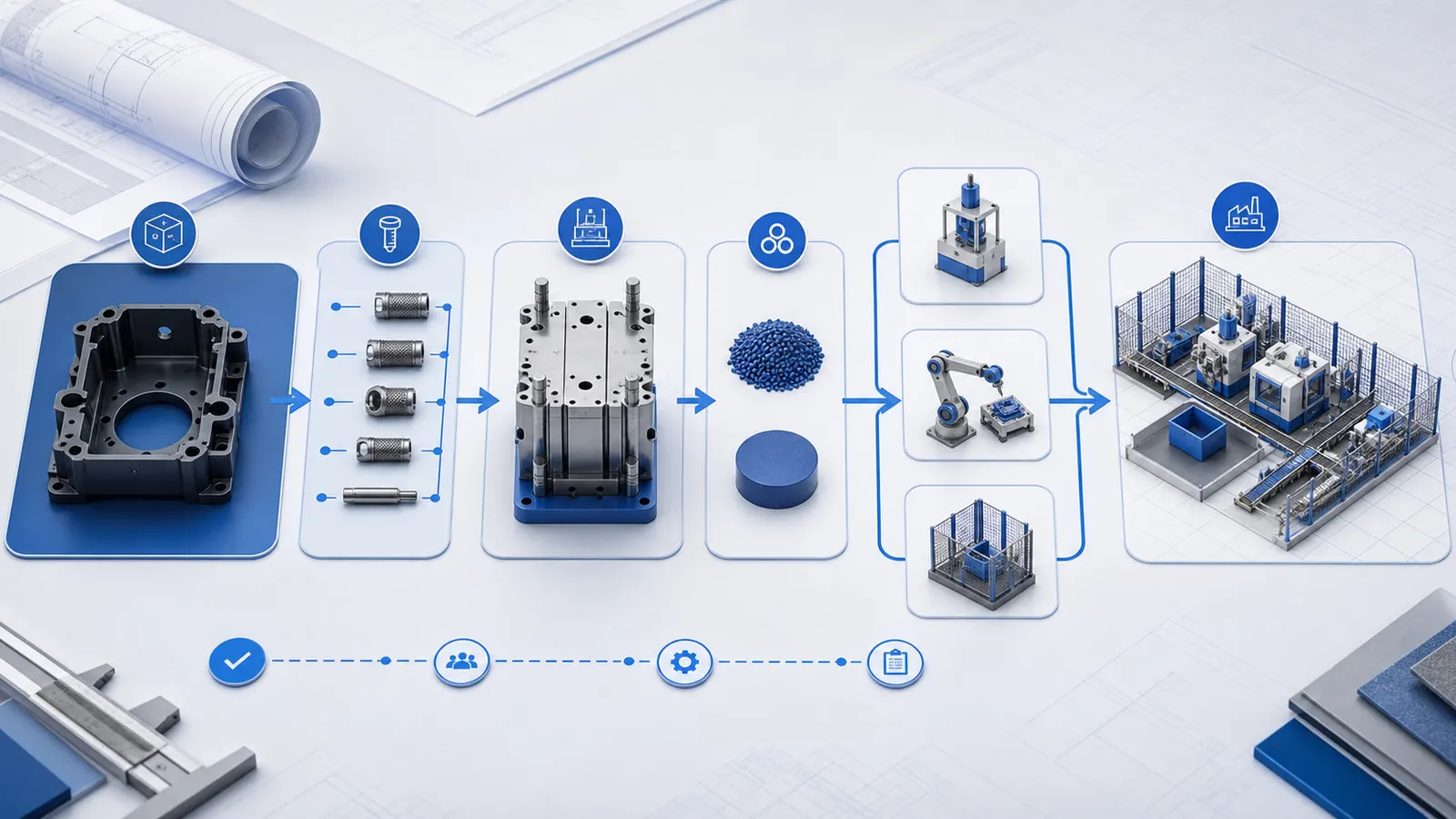
Cosmetic tube projects are often discussed with a broad phrase: “tube making machine.” For machine selection, that phrase is too wide. A project may involve molded caps, shoulders, closures, tube-related inserts, soft-touch parts, or a larger production cell that connects molding with feeding, inspection, and packing.
This case is useful when your team needs to clarify the project boundary before asking for a machine recommendation. Deboge should first understand what part is being molded and how that part fits into the full cosmetic tube production process.

Project Situation
The first task is to define the product scope. A cosmetic tube project can mean different production needs:
- a cap or closure molded as a separate component
- a shoulder or connector area for the tube
- a soft-touch grip or overmolded feature
- an insert or fitting that needs accurate positioning
- a larger production cell with feeding, molding, transfer, inspection, and collection
Each path leads to a different machine discussion. The supplier cannot recommend a responsible configuration from the words “cosmetic tube” alone.
Questions That Shape the Machine Path
Cosmetic packaging projects often have appearance and handling requirements. Surface marks, part cleanliness, gate position, part release, and collection method may matter as much as injection and clamping.
Before discussing a machine, clarify:
- Which component is being molded?
- Is the project for a standalone molded part or an integrated production cell?
- What material is used for the tube, cap, shoulder, closure, or soft-touch area?
- Does the product require overmolding, insert loading, or secondary assembly?
- How will parts be fed, removed, inspected, and packed?
- Will automation be required immediately, or should the machine allow future automation?
For cosmetic packaging, a good project discussion defines the process boundary first. The machine for a molded cap is not the same conversation as a machine or cell for tube handling, transfer, and downstream collection.

Machine Configuration Discussion
If the project involves molded caps, shoulders, or closures, Deboge can review a standard vertical molding machine from part geometry, mold layout, and removal method. If the project involves soft-touch overmolding, insert holding, or special tube handling, a custom configuration or automation-ready machine may be more suitable.
The discussion usually falls into three paths:
- Molded component only: review material, cavity count, mold size, appearance requirement, and part removal.
- Overmolded or insert-related component: review substrate holding, positioning, bonding, and loading access.
- Integrated production cell: review feeding, transfer, inspection, packing, and machine signal coordination.
The right path depends on the product and the workflow, not on a generic machine label.
Appearance and Handling Notes
Cosmetic packaging parts are judged visually. A molded component may need clean surface appearance, consistent color, controlled gate mark position, and careful collection to avoid scratches or deformation. If the part is thin, flexible, or glossy, the handling method after molding can affect the final product as much as the molding process itself.
Prepare these details before requesting a recommendation:
- product drawing or sample photos
- material information
- mold concept and cavity count, if available
- surface appearance requirement
- expected removal and collection method
- connection to downstream tube production or packing
- target output and automation expectation

What This Case Means for Similar Projects
This case should be treated as a project-scope reference. The first decision is not the machine model. The first decision is what the machine must actually do inside the cosmetic tube workflow.
If you are preparing a cosmetic tube, cap, shoulder, closure, or soft-touch packaging project, send Deboge the product samples, material information, mold plan, and production sequence. Deboge can then review whether a standard vertical machine, automation-ready platform, or custom machine configuration is the better starting point.
Related Reading
Related Reading
Have a similar application?
Contact Deboge engineering to discuss your production requirements and machine configuration.