
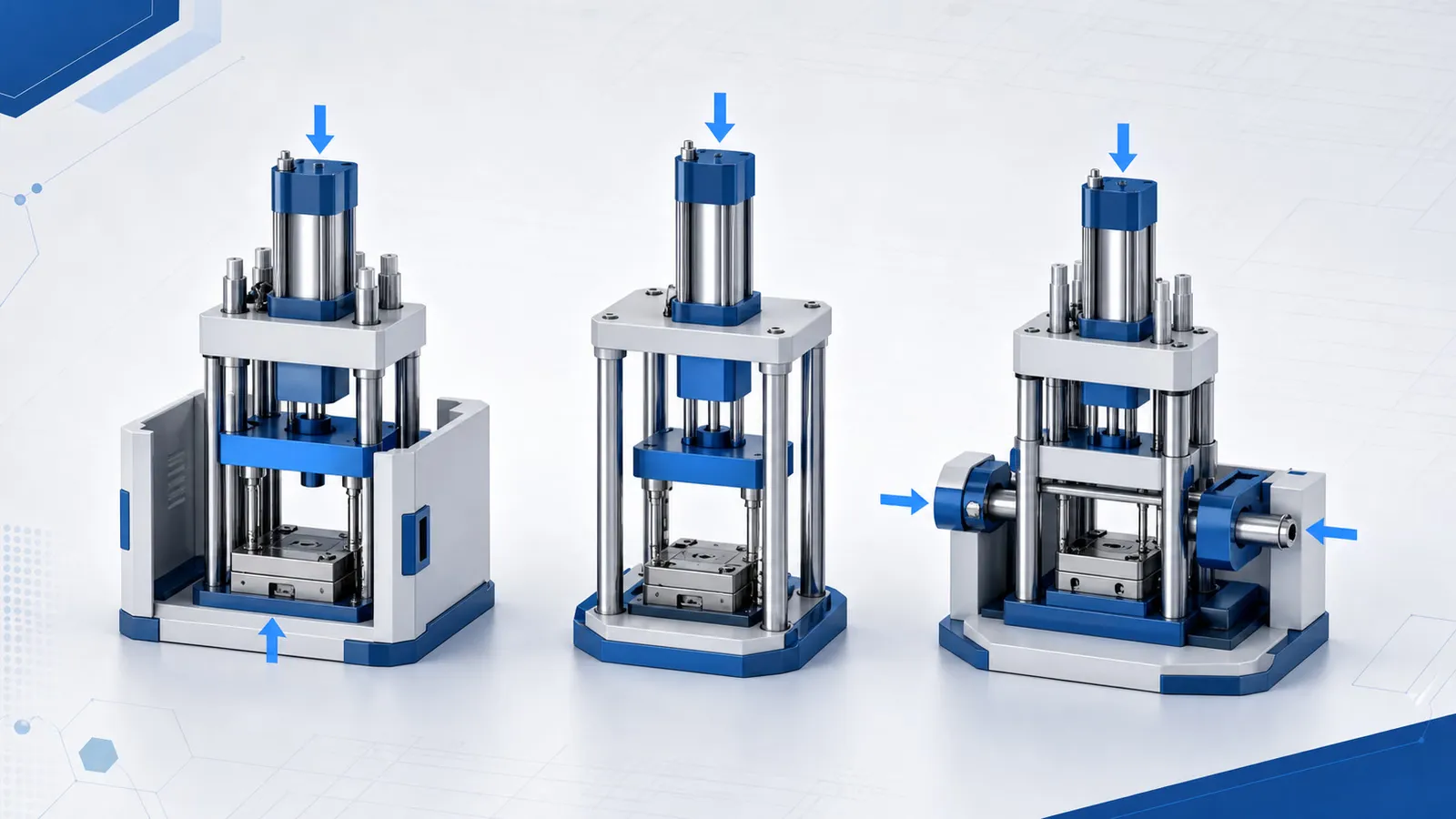
DA, DC, and DK Machine Structure Selection Guide
Compare DA, DC, and DK vertical molding machine structures by reviewing clamping structure, injection direction, mold access, gate layout, and application fit.
2026-07-11 | 10 min read | Category: Choose by Machine Structure
DA, DC, and DK are Deboge machine structure families used in different vertical molding discussions. The correct choice depends on clamping structure, injection direction, mold access, gate layout, loading workflow, and the part being molded.
This guide keeps the terminology precise. DA Series combines vertical clamping with vertical injection. DC Series is defined by tie-bar-less vertical clamping, and injection direction depends on configuration. DK Series combines vertical clamping with horizontal injection.
Quick Answer
Use DA when a standard vertical clamping and vertical injection structure fits the mold and loading workflow. Review DC when open side access or tie-bar-less clamping is important. Review DK when vertical clamping is useful but horizontal injection better matches shot, gate, or mold layout needs.
When This Guide Is Most Useful
Use this guide when a project is not just choosing a table type but comparing machine structure families. It is especially useful when the team is unsure whether the key issue is mold access, injection direction, shot capacity, table layout, or insert loading.
Selection Path
Separate clamping direction from injection direction
The word vertical often describes the clamping structure, not necessarily the injection direction. A project can need vertical clamping for loading access while the injection unit direction remains a separate technical decision.
Review DA Series for standard vertical structure needs
DA Series Standard Vertical Injection Molding Machines are a practical starting point when vertical clamping and vertical injection fit the product, mold concept, and table configuration.
Review DC Series when side access matters
DC Series Tie-bar-less Vertical Clamping Machines should be discussed when tie-bars would limit loading, cable routing, fixture movement, mold access, or automation approach. Do not describe DC as only horizontal injection; the defining feature is tie-bar-less vertical clamping.
Review DK Series when horizontal injection is part of the mold plan
DK Series Vertical Clamping Horizontal Injection Machines combine vertical clamping with horizontal injection. This structure can be reviewed when the mold, gate direction, shot requirement, or plasticizing discussion points toward a horizontal injection unit.
Decision Points to Review
| Review point | Why it matters | What to prepare |
|---|---|---|
| Clamping structure | It affects mold opening, platen support, and loading access. | Mold concept, clamp access needs, and fixture movement. |
| Injection direction | It affects gate layout, barrel position, and mold design. | Gate concept, material path, and shot requirement. |
| Side access | Cables, large inserts, and robots may need a more open approach. | Loading photos, insert size, cable routing, and robot path if planned. |
| Table configuration | The table still affects loading rhythm even after structure is chosen. | Fixed, slide, or rotary workflow assumptions. |
How to Compare Common Options
| Option | When it may fit | What to verify |
|---|---|---|
| DA Series | Standard vertical clamping and vertical injection fit the project. | Mold access, injection direction, and table configuration. |
| DC Series | Tie-bars limit access or side approach for loading, cables, fixtures, or automation. | That tie-bar-less clamping is genuinely needed and injection direction is confirmed separately. |
| DK Series | Vertical clamping is useful and horizontal injection better supports the mold or shot discussion. | Gate layout, barrel position, and mold access around the horizontal injection unit. |
Information to Prepare Before Asking for a Recommendation
| Information | Why Deboge needs it |
|---|---|
| Part and insert drawings | They show whether standard access is enough or open side access is needed. |
| Mold and gate concept | Structure review depends on how material enters the mold. |
| Loading workflow | Side loading, cable routing, and fixture movement can change the structure discussion. |
| Material and shot expectations | The injection unit discussion depends on material and project scope. |
Common Mistakes to Avoid
- Calling DC Series only a horizontal injection machine.
- Calling DK Series simply a vertical injection machine.
- Choosing a structure family before reviewing gate direction and mold access.
- Treating DA, DC, and DK as price levels instead of structural options.
How This Guide Connects to Other Resources
Use this guide together with the table configuration guide. After the structure family is clearer, review the application-specific guides for insert molding, cable connector overmolding, thermoset, LSR, or automation planning.
Related Reading
- Standard Vertical Injection Molding Machines
- Tie-bar-less Vertical Clamping Machines
- Vertical Clamping Horizontal Injection Machines
- Vertical Clamping Horizontal Injection
FAQ
What is the main difference between DA, DC, and DK structures?
DA uses standard vertical clamping with vertical injection, DC is defined by tie-bar-less vertical clamping, and DK combines vertical clamping with horizontal injection.
Does DC Series always mean horizontal injection?
No. DC Series means tie-bar-less vertical clamping. Injection direction depends on the selected configuration and should be confirmed separately.
When should DK Series be reviewed?
Review DK when vertical clamping is useful but horizontal injection better matches the mold, gate layout, shot requirement, or plasticizing discussion.
Can table configuration still matter after choosing DA, DC, or DK?
Yes. Table configuration affects loading, unloading, station separation, and production rhythm, so it should be reviewed together with the structure family.
Related Reading
Ready to confirm a machine selection?
Send your product details, mold specs, and production requirements. Deboge engineering will review and recommend a specific configuration.