
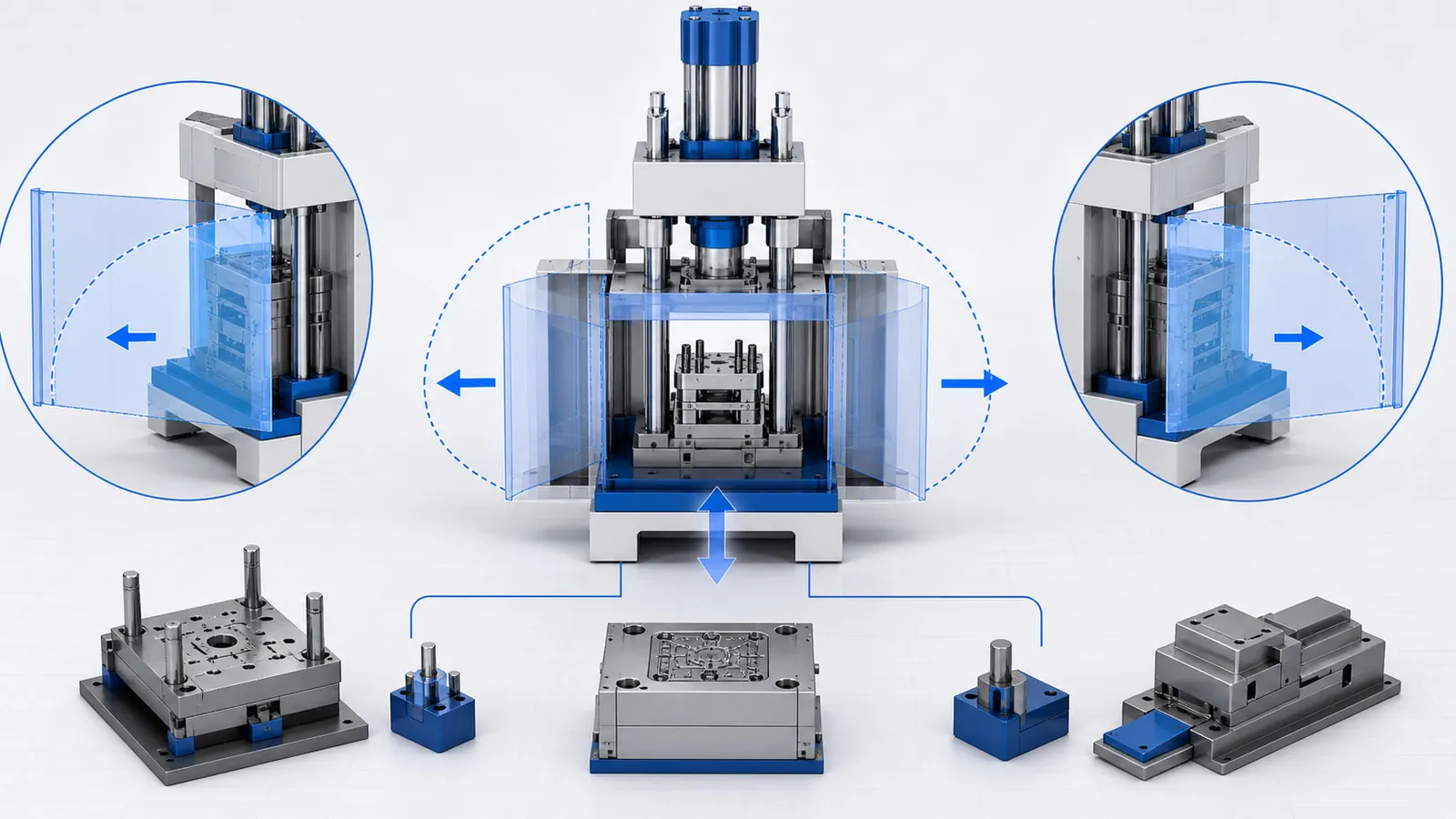
Overmolding Machine Selection Guide
Select a vertical molding machine for overmolding by reviewing substrate handling, mold access, table layout, material questions, part removal, and production workflow.
2026-07-11 | 9 min read | Category: Choose by Application
Overmolding adds new material over an existing substrate or prepared component. Machine selection depends on how that substrate is loaded, protected, supported, molded, and removed after the second material is applied.
This guide helps organize the machine discussion around substrate handling, mold access, table layout, material questions, and workflow. Material bonding or compatibility must be confirmed through project-specific technical review.
Quick Answer
For overmolding, review the substrate shape, loading direction, fixture support, material pair, gate and mold concept, part removal, and automation expectations. The machine should support the substrate workflow as well as the molding step.
When This Guide Is Most Useful
Use this guide when the product includes an existing part, cable, plug, handle, seal, or component that must be placed into the mold before additional material is molded around it.
Selection Path
Describe the substrate
The substrate may be rigid, flexible, heat-sensitive, pre-assembled, or connected to a cable. These details affect support, access, and removal.
Review how the substrate is held
The fixture or mold detail must prevent movement during mold close and injection. Support method can influence table choice and operator access.
Check material and surface questions
Overmolding may depend on material pairing, surface condition, temperature, and part design. The machine guide can prepare the discussion, but material compatibility should be reviewed separately.
Match table layout to the handling task
If the substrate is easy to load, a simpler table may work. If the substrate needs careful placement, side access, or station separation, slide table, rotary table, or tie-bar-less access may be reviewed.
Decision Points to Review
| Review point | Why it matters | What to prepare |
|---|---|---|
| Substrate condition | Shape, flexibility, and pre-assembly affect handling and support. | Photos, drawings, material notes, and sample parts. |
| Fixture and support | The substrate must stay positioned before and during molding. | Fixture concept, loading direction, and contact points. |
| Material pair | Bonding and processing behavior depend on the real materials. | Material names, data sheets, and surface treatment notes. |
| Part removal | Overmolded parts may be flexible, attached to cables, or sensitive to pulling. | Removal method and collection plan. |
How to Compare Common Options
| Option | When it may fit | What to verify |
|---|---|---|
| Standard vertical structure | Substrate loading is simple and vertical injection fits the mold concept. | Mold access, gate direction, and removal clearance. |
| Slide or rotary table | The substrate benefits from outside loading or station separation. | Loading time, fixture movement, and station sequence. |
| Tie-bar-less clamping | Side access is limited by cables, long substrates, or automation approach. | Whether open access is truly required. |
Information to Prepare Before Asking for a Recommendation
| Information | Why Deboge needs it |
|---|---|
| Substrate sample photos | They show the handling task better than text alone. |
| Material information | The material pair affects process review and should not be guessed. |
| Mold and fixture assumptions | They connect the substrate to table and access decisions. |
| Expected production workflow | Output target and labor plan affect machine layout. |
Common Mistakes to Avoid
- Discussing only the new molding material and ignoring the existing substrate.
- Assuming machine selection can confirm material bonding without technical review.
- Forgetting cable, handle, or part geometry when checking mold access.
- Choosing a table layout before reviewing fixture support.
How This Guide Connects to Other Resources
Use this guide with the mold access and insert loading knowledge pages. For cable-heavy products, continue with the cable connector guide. For soft material questions, review the materials section.
Related Reading
- What Is Overmolding?
- Mold Access
- Cable Connector Overmolding Machine Selection Guide
- Soft and Flexible Materials
FAQ
What is the first machine selection question for overmolding?
Start with the substrate: its shape, material, loading direction, support method, and removal requirements.
Can Deboge confirm overmolding material compatibility from the guide?
No. Material compatibility needs project-specific technical review using the real materials, part design, and process conditions.
When does overmolding need side access?
Side access may matter when the substrate is long, connected to cables, held by a fixture, or loaded by automation from the side.
Is overmolding always an insert molding process?
It is related because a substrate is placed before molding, but the selection discussion should focus on substrate handling, material pairing, and final part removal.
Related Reading
Ready to confirm a machine selection?
Send your product details, mold specs, and production requirements. Deboge engineering will review and recommend a specific configuration.