
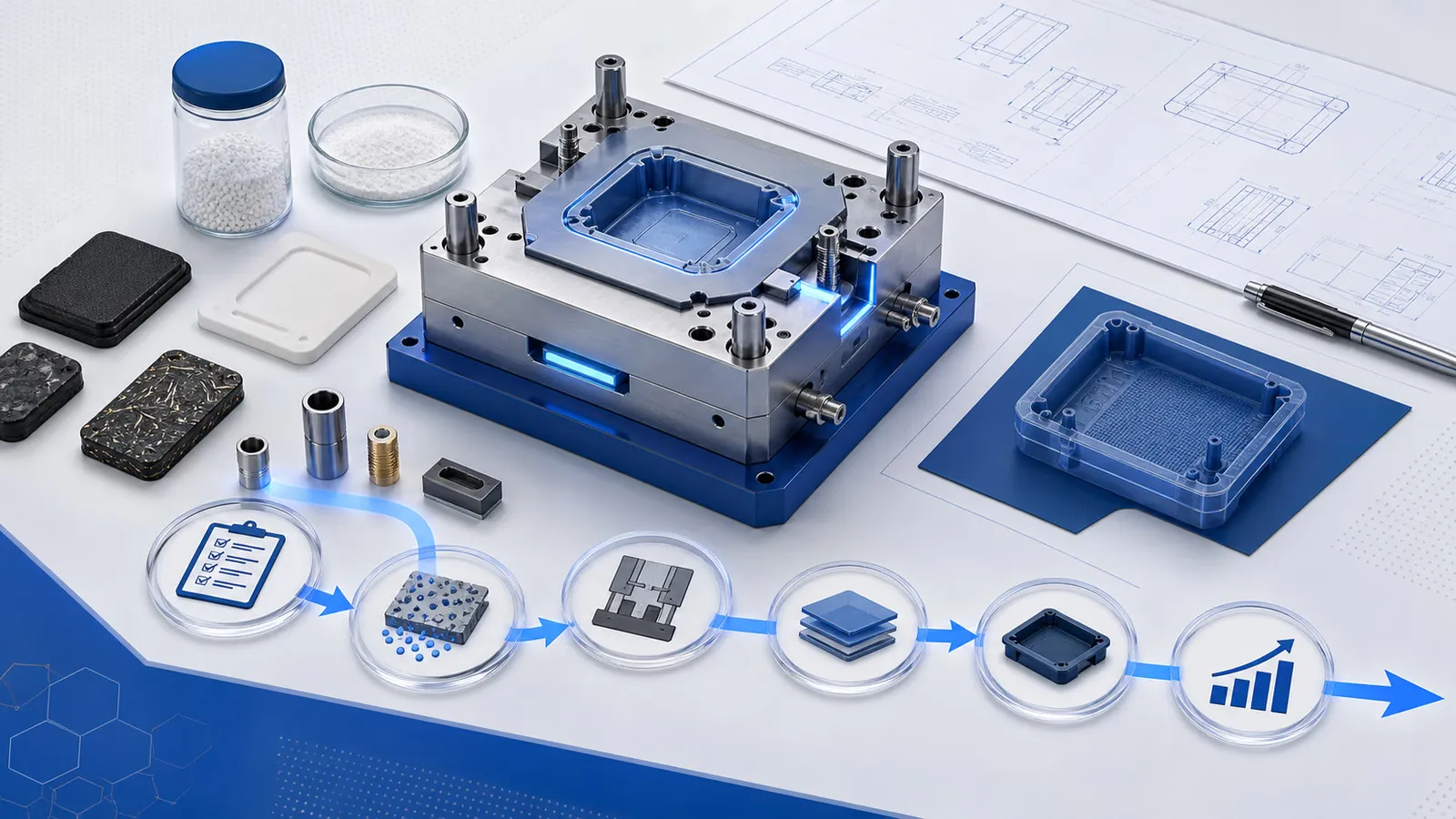
What Is Thermoset Molding?
Understand thermoset molding concepts, curing behavior, mold heating, material handling, and why thermoset machine review differs from thermoplastic projects.
2026-07-11 | 8 min read | Category: Application-related Concepts
Quick Answer
Thermoset molding processes materials that cure into a hardened shape through heat and reaction. After curing, the material does not melt and flow again like a thermoplastic.
Why should thermoset projects be reviewed differently from thermoplastic molding projects? Start with the workflow, not only the machine name. The term helps a project team discuss the part, material, mold, loading method, removal method, and production target with the same meaning.
Use this page as a concept reference, not as a final machine specification, mold design rule, or processing parameter recommendation.
What Thermoset Molding Means in a Molding Project
Thermoset molding discussions often include BMC, DMC, phenolic, melamine, urea, or related material families. The key difference is curing behavior. The material must fill the mold and then cure under suitable conditions. This makes mold heating, curing time, material feeding, part removal, flash control, and cleanup part of the machine discussion. It is not enough to ask whether a machine can inject material; the process must be reviewed around material behavior and mold design.
For thermoset molding, the machine discussion should include material form, feeding behavior, mold heating, curing time, flash control, part release, and cleaning needs. These conditions affect the configuration more than the material name alone.
Why It Matters for Machine Selection
Machine selection should consider material form, feeding method, mold temperature control, curing time, clamping stability, part removal, and the practical evidence available from material supplier and mold trials.
| Review point | Why it matters |
|---|---|
| Material form | BMC, DMC, or other thermoset materials can create different feeding and handling questions. |
| Curing time | Affects cycle planning and whether table configuration provides workflow benefit. |
| Mold heating | Temperature control and mold design are central to stable curing. |
| Flash and removal | Thermoset parts may require careful review of clamping, mold condition, and finishing workflow. |
How to Compare Related Options
The best option depends on the actual part and production method. Use the comparison below as a review map, then confirm the project details with drawings, samples, material information, and mold concept.
| Concept | Practical meaning |
|---|---|
| Thermoplastic molding | Material melts, flows, cools, and can usually be remelted. |
| Thermoset molding | Material fills the mold and cures through heat and reaction. |
| BMC/DMC projects | Often require material feeding, curing, and heated mold discussion. |
| Insert thermoset molding | Adds insert loading, position, and heat exposure questions. |
What to Check Before Requesting a Recommendation
Before asking Deboge to recommend a machine structure, collect the information that explains the real production task. Clear project evidence is more useful than a broad keyword.
| Review point | Why it matters |
|---|---|
| Material data | Material family, supplier sheet, form, storage notes, and known processing guidance. |
| Mold concept | Heating method, cavity layout, venting, and part removal method if known. |
| Part requirements | Product shape, insert details, appearance, insulation, heat resistance, or strength requirements. |
| Trial evidence | Photos of short shot, flash, incomplete cure, sticking, or other symptoms if production exists. |
Common Mistakes to Avoid
- Treating thermoset material like a normal thermoplastic.
- Ignoring mold heating and curing time when discussing output.
- Assuming flash is only a machine clamping issue.
- Choosing machine structure before reviewing material and mold behavior.
How This Connects to Other Resource Pages
Knowledge Base pages explain the concept. Machine pages show available machine structure directions. Guides help compare options when a project is closer to inquiry. Troubleshooting and material pages help when an existing process already has symptoms.
- Thermoset Materials
- Thermoset BMC Machine Selection Guide
- 250-ton BMC DMC Case Study
- Incomplete Cure in Thermoset Molding
FAQ
What is the main difference between thermoset and thermoplastic molding?
Thermoplastic material melts and cools. Thermoset material cures through heat and reaction and does not melt back into the same flowable state.
Why does curing time matter?
Curing time can be a major part of cycle time, so output planning must review filling, curing, opening, removal, and any finishing steps.
Can thermoset machine selection be made from tonnage alone?
No. Material form, mold heating, curing behavior, part geometry, flash risk, and removal method all matter.
What should be prepared for a thermoset inquiry?
Prepare material data, part drawings, mold concept, insert details, expected output, and any defect or trial photos.
Related Reading
Need technical information specific to your application?
Deboge engineering can answer your machine structure, configuration, and process questions directly.