
What Is Vertical Clamping?
Understand vertical clamping, how the mold opens and closes, why it matters for insert placement, and how clamping direction differs from injection direction.
2026-07-11 | 8 min read | Category: Core Concepts
Quick Answer
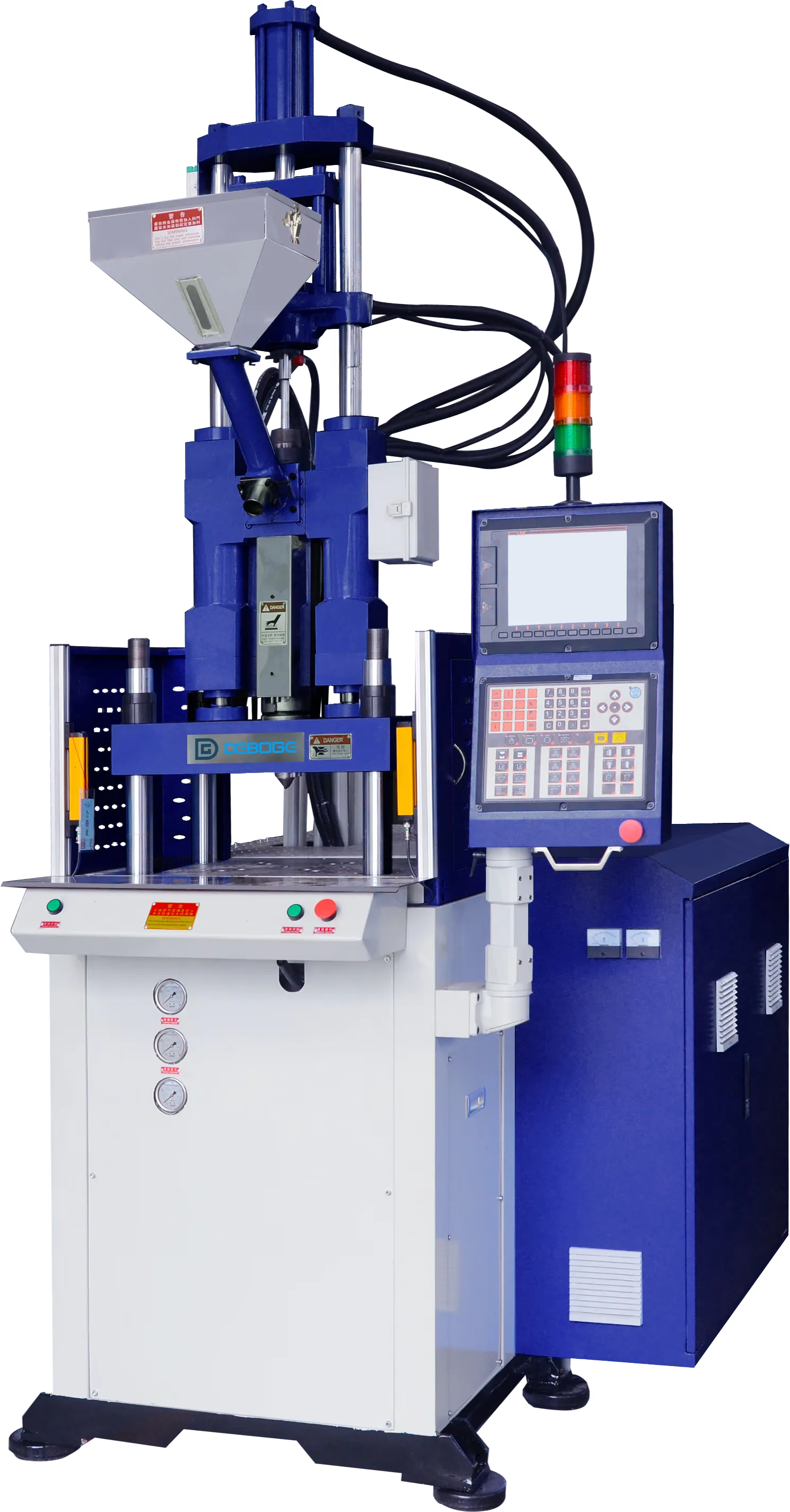
Vertical clamping means the mold opens and closes along a vertical axis. It describes the clamping movement and mold access direction, not necessarily the injection direction.
Why does vertical clamping matter before comparing machine models? Start with the workflow, not only the machine name. The term helps a project team discuss the part, material, mold, loading method, removal method, and production target with the same meaning.
Use this page as a concept reference, not as a final machine specification, mold design rule, or processing parameter recommendation.
What Vertical Clamping Means in a Molding Project
Vertical clamping affects how the operator, fixture, or automation system reaches the lower mold half while the mold is open. In insert molding, the loading step often decides whether production is stable. Inserts must sit in the right position before the mold closes. If the loading position is awkward, if visibility is poor, or if cables and terminals are difficult to route, the machine may meet basic capacity requirements but still be difficult to use in daily production. This is why clamping direction belongs in the same discussion as mold layout and product handling.
Use vertical clamping to describe how the mold opens and closes, then confirm the separate questions: injection direction, table movement, insert loading, part removal, material behavior, and automation access. This avoids treating every vertical machine as the same structure.
Why It Matters for Machine Selection
When vertical clamping is discussed, the next questions are usually about mold access, tie-bar location, table movement, loading time, part removal, and whether the injection unit should be vertical or horizontal for the specific mold concept.
| Review point | Why it matters |
|---|---|
| Mold access | Shows how easily operators or automation can reach the loading area. |
| Insert stability | Helps review whether inserts can stay seated before mold close. |
| Tie-bar layout | Affects side access, large insert handling, cable routing, and maintenance space. |
| Injection direction | Must be reviewed separately because vertical clamping does not define how material enters the mold. |
How to Compare Related Options
The best option depends on the actual part and production method. Use the comparison below as a review map, then confirm the project details with drawings, samples, material information, and mold concept.
| Concept | Practical meaning |
|---|---|
| Vertical clamping | Mold opens upward and downward, often useful for insert placement and lower mold access. |
| Horizontal clamping | Common in many thermoplastic molding layouts, but insert placement workflow may be different. |
| Tie-bar vertical clamping | Conventional structure with guided platen alignment around the mold area. |
| Tie-bar-less vertical clamping | Keeps vertical clamping while opening access around the mold area. |
What to Check Before Requesting a Recommendation
Before asking Deboge to recommend a machine structure, collect the information that explains the real production task. Clear project evidence is more useful than a broad keyword.
| Review point | Why it matters |
|---|---|
| Insert details | Shape, weight, orientation, and whether the insert needs a fixture before mold close. |
| Operator access | Which side the operator uses, whether both hands are needed, and whether visibility is limited. |
| Mold movement | Opening stroke, mold height, and any part features that may interfere with removal. |
| Safety and automation | Guarding, loading device, robot access, and expected responsibility between operator and machine. |
Common Mistakes to Avoid
- Using vertical clamping and vertical injection as if they mean the same thing.
- Reviewing clamp tonnage without checking whether the operator can safely load the product.
- Ignoring insert height, cable direction, or fixture clearance.
- Assuming open access is only a comfort issue instead of a production workflow issue.
How This Connects to Other Resource Pages
Knowledge Base pages explain the concept. Machine pages show available machine structure directions. Guides help compare options when a project is closer to inquiry. Troubleshooting and material pages help when an existing process already has symptoms.
- Vertical Injection Molding
- Tie-bar-less Vertical Clamping
- Mold Access
- DC Series Tie-bar-less Vertical Clamping Machines
FAQ
Is vertical clamping the same as vertical injection?
No. Vertical clamping describes mold movement. Injection direction describes how material enters the mold and can be vertical or horizontal depending on the machine configuration.
Why does vertical clamping help insert molding?
It can make the lower mold half accessible and can help inserts remain seated before the mold closes, which is important for repeatable loading.
When should tie-bar-less vertical clamping be discussed?
Discuss it when tie-bars limit side access, cable routing, large insert loading, fixture movement, or maintenance space around the mold.
What information helps review vertical clamping layout?
Provide product photos, insert orientation, mold concept, loading side, removal method, and any automation or safety requirements.
Related Reading
Need technical information specific to your application?
Deboge engineering can answer your machine structure, configuration, and process questions directly.