
DA, DC, and DK Machine Structures: How to Discuss the Difference
Practical explanation of DA, DC, and DK vertical injection molding structures, including clamping style, injection direction, and selection questions.
2026-07-11 | 8 min read | Category: Comparisons & Selection Questions
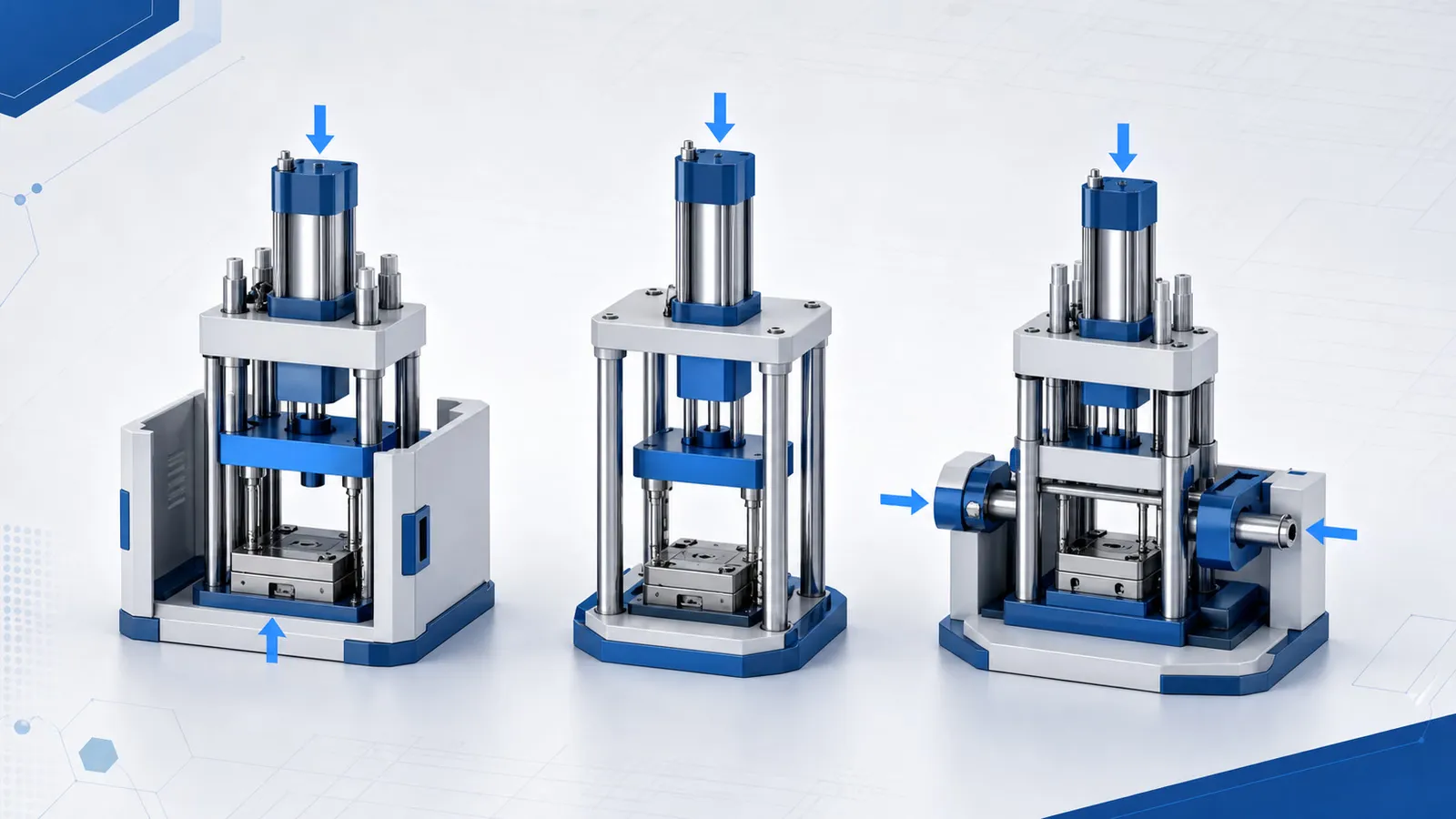
DA, DC, and DK are not just model labels. They describe different machine structures, and the structure affects mold access, injection direction, table configuration, insert loading, and the way your team should prepare a project discussion. The short version is simple: DA is standard vertical clamping with vertical injection, DC is tie-bar-less vertical clamping with injection direction depending on configuration, and DK is vertical clamping with horizontal injection.
This article is a practical starting point. For a step-by-step selection path, use the machine selection guide as the primary reference.
Why Structure Comes Before Model Selection
Many projects start with machine size, clamp force, or price. Those details matter, but they should not be discussed before the production method is clear. A vertical injection molding machine is part of a work process: operators or automation load inserts, the mold closes, material is injected, the part cools or cures, and the finished part is removed.
The machine structure decides how easy that workflow is to execute. If the mold area is obstructed, insert loading can slow down. If the injection direction does not match the mold concept, the tooling discussion becomes harder. If the table configuration does not match the loading time, the machine may wait while the operator prepares the next shot.
That is why DA, DC, and DK should be discussed as structure choices first, not only as machine names.
DA Series: Standard Vertical Clamping and Vertical Injection
DA Series machines are the standard vertical injection molding structure: vertical clamping with vertical injection. This layout is familiar to many insert molding projects because the mold opens vertically and the injection unit works from above.
DA is often a starting point when the part, insert, and mold layout do not require unusually open access. It can be paired with fixed platen, slide table, or rotary table concepts depending on the workflow. Discuss insert loading method, mold size, operator access, and expected production rhythm before choosing the exact configuration.
Useful related pages include standard vertical injection molding machines and slide table machines.
DC Series: Tie-bar-less Vertical Clamping
DC Series means tie-bar-less vertical clamping. The defining point is the open clamping area, not a fixed injection direction. Depending on configuration, injection can be arranged for the application.
The value of DC is usually discussed around access. If wires, cables, terminals, metal inserts, or awkward product geometry make conventional tie-bars inconvenient, an open mold area can make loading and positioning easier. This does not mean DC is automatically right for every insert molding job. If inserts are simple and access is already clear, the benefit may be limited.
The primary machine page is tie-bar-less vertical clamping machines. For application context, see cable connector overmolding.
DK Series: Vertical Clamping with Horizontal Injection
DK Series means vertical clamping with horizontal injection. It should not be described simply as a vertical injection machine, because the injection direction is a key part of the structure.
Horizontal injection can matter when mold layout, runner design, insert position, or production access makes side injection more suitable. DK discussions should include the product geometry, material flow concept, and how the operator or automation will approach the mold area.
The related machine page is vertical clamping horizontal injection machines.
Questions to Prepare Before Asking for a Recommendation
Before asking Deboge to recommend DA, DC, or DK, prepare the product drawing, molded part photos if available, insert samples, material family, mold concept, loading method, and target production workflow. The goal is not to guess a machine from a keyword. The goal is to match machine structure to the actual work around the mold.
Useful questions include:
- Will the operator load inserts by hand or will automation be considered?
- Do cables, terminals, or long inserts need open clearance around the mold?
- Does the mold concept require vertical injection, horizontal injection, or either?
- Is loading time shorter than, similar to, or longer than the molding cycle?
- Is the project closer to a fixed platen, slide table, or rotary table workflow?
If these details are not clear yet, send the available project information through Contact Deboge. A structure recommendation should come after the production method is understood.
FAQ
Is DC the same as horizontal injection?
No. DC Series means tie-bar-less vertical clamping. Injection direction depends on configuration.
Is DK just another name for a vertical injection molding machine?
No. DK means vertical clamping with horizontal injection. The horizontal injection direction is part of the definition.
Can one application use different structures?
Sometimes yes. The final choice depends on mold design, insert loading, table configuration, material discussion, and production workflow.
Related Reading
Have a question about this topic?
Contact Deboge engineering for technical questions specific to your application and production requirements.