
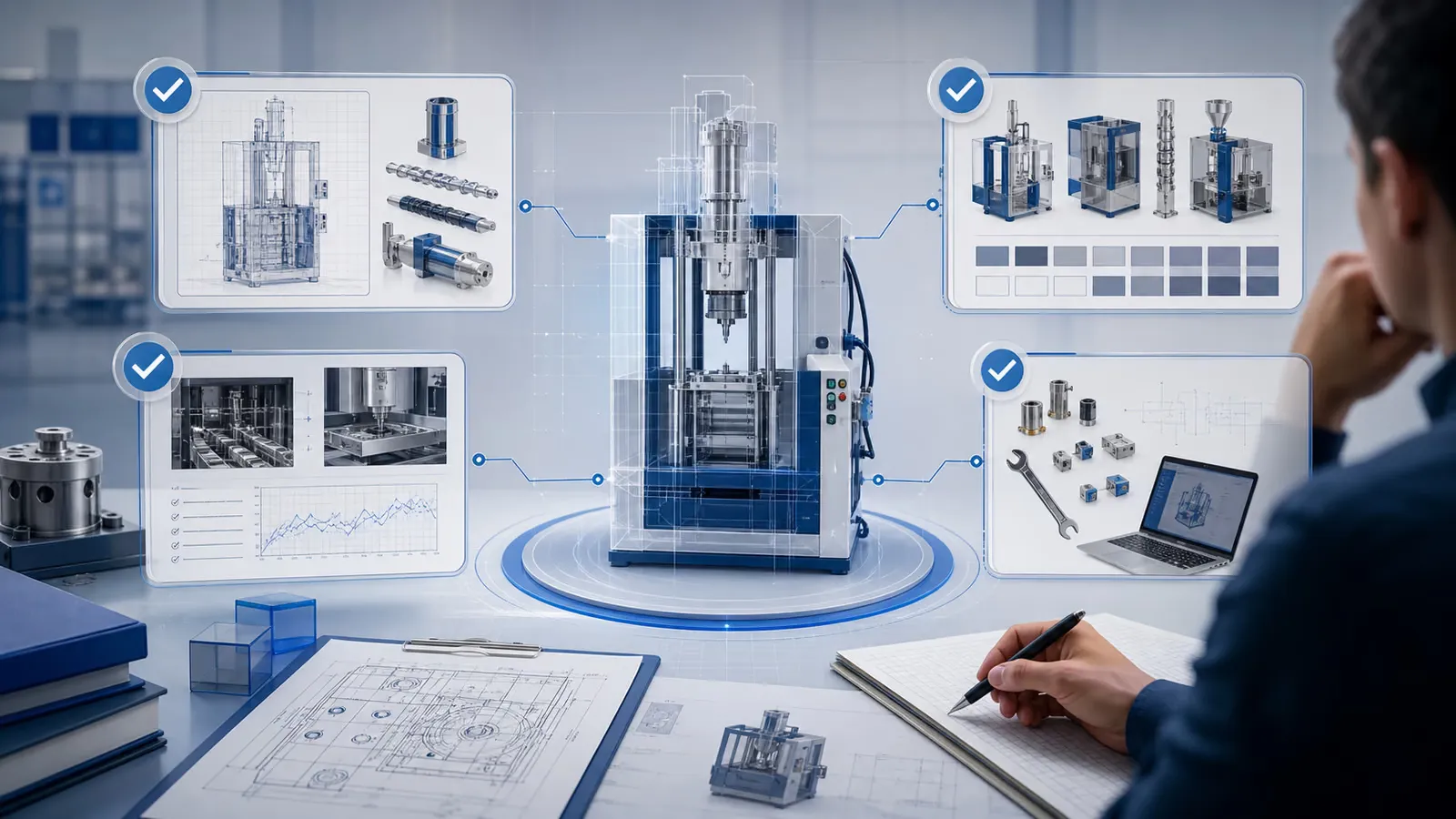
How to Evaluate a Vertical Injection Molding Machine Supplier: Questions to Ask Before You Buy
Evaluate vertical injection molding machine suppliers by reviewing engineering support, configuration guidance, factory process, and after-sales service.
2026-07-09 | 7 min read | Category: Project Planning
Finding a vertical injection molding machine supplier is one thing. Knowing whether they can deliver a machine that fits your product, mold, and production requirements is another. A supplier’s website or catalog can tell you what machines they offer — but it rarely tells you how they engineer, build, test, and support them. This article outlines the practical questions that help separate a capable manufacturing partner from a machine trader.
Does the Manufacturer Design and Build the Machines?
The first distinction to make is whether the company is a manufacturer with in-house engineering and assembly, or a trading company that sources machines from third-party factories. This matters for several reasons:
- Customization: A manufacturer can modify clamp stroke, table size, injection unit specifications, and control logic to match your mold and process requirements. A trader typically sells standard configurations with limited customization options.
- Quality control: A manufacturer controls the machining, assembly, and testing processes directly. When a machine leaves their factory, they are accountable for its performance and reliability.
- Long-term support: A manufacturer holds design documentation, spare parts inventory, and technical knowledge for machines they built. When you need a replacement component or a configuration change three years later, they can respond without routing through an anonymous supply chain.
When evaluating a supplier, ask where their machines are designed and assembled. Visit the factory if possible. A workshop tour — seeing the assembly line, machining equipment, and testing area — reveals more than any brochure.
Can They Recommend the Right Configuration for Your Application?
A supplier who understands your application can recommend the appropriate machine structure, table configuration, and injection unit specifications. A supplier who only asks about your budget cannot.
Key discussion points with a prospective supplier:
- Application description: Describe your product, mold layout, insert type, and production volume. The supplier should ask clarifying questions — about insert loading method, mold dimensions, cycle time expectations, and material characteristics.
- Machine structure recommendation: Based on your application, the supplier should explain whether a standard vertical structure (DA Series), tie-bar-less vertical clamping (DC Series), or vertical clamping with horizontal injection (DK Series) is the better fit — and why. If they cannot articulate the engineering reasoning behind the recommendation, they may not understand your process.
- Table configuration: The supplier should help you evaluate fixed platen, single slide, double slide, or rotary table configurations based on your insert loading workflow and production volume. For a broader selection workflow, see the machine selection guide.
A capable supplier’s technical team engages with your application before quoting a machine. If the first response to your inquiry is a price list rather than questions about your product, consider it a warning sign.
What Happens Before the Machine Ships?
Factory acceptance testing and quality control processes vary significantly across manufacturers. Ask the supplier to describe what happens between final assembly and container loading:
- Function testing: Is every machine run under power before shipping? Are clamp force, injection pressure, temperature control, and cycle sequence verified against specification?
- Mold trial: If you provide a sample mold, does the supplier run a mold trial to confirm the machine operates correctly with your tooling?
- Calibration and documentation: Are test records provided? Does the machine ship with a documented configuration sheet listing installed components, settings, and test results?
Visit About Deboge to see how the company presents its manufacturing and quality control processes.
After-Sales: What Support Comes with the Machine?
A machine purchase is a long-term relationship. Before committing, clarify:
- Installation and training: Does the supplier provide on-site installation support and operator training? Is this included or priced separately?
- Spare parts: Does the supplier maintain a spare parts inventory for the machine series you are buying? What is the typical lead time for common replacement components — hydraulic seals, heater bands, controller parts?
- Technical support: After installation, can you reach the engineering team for process troubleshooting? What is the typical response time?
These questions are especially important for international projects where machines are shipped across regions, where distance and time zones can complicate after-sales support. For common pre-purchase questions, see the FAQ section covering machine selection, customization, lead times, and installation support.
Visit the Factory
The most reliable way to evaluate a supplier is to visit their manufacturing facility. A factory visit lets you see the assembly workflow, quality control processes, and the team you will be working with. You can also discuss your application directly with the engineering team — face-to-face technical discussions often surface details that get lost in email exchanges.
Deboge welcomes factory visits at our Ningbo, China manufacturing facility. Contact us to schedule a visit or to discuss your application with our engineering team before making the trip.
Related Reading
Have a question about this topic?
Contact Deboge engineering for technical questions specific to your application and production requirements.