
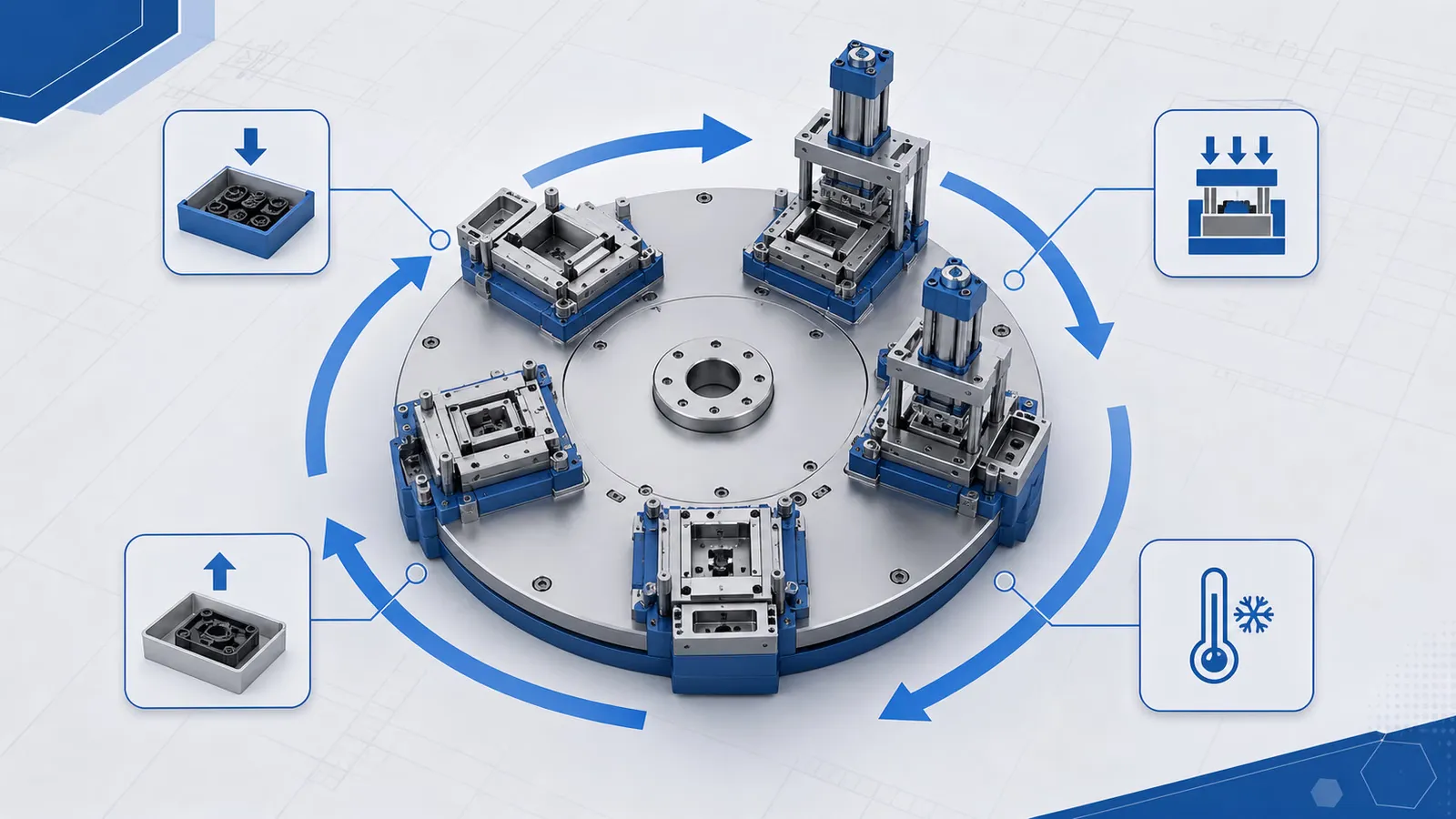
Fixed Platen, Slide Table, and Rotary Table Overview
Review how fixed platen, slide table, and rotary table configurations affect loading access, part removal, cycle rhythm, and automation planning.
2026-07-13 | TABLE CONFIGURATION | Online reference
Table configuration changes how people, fixtures, molds, and automation systems interact with the machine. It should be discussed early because it can affect productivity even when the clamping and injection units are suitable.
Fixed Platen
Fixed platen machines can be reviewed when loading, part removal, and mold access are straightforward. This path is useful when the project does not need the lower mold to move out of the clamping area.
Prepare:
- product and mold photos or drawings
- loading and unloading method
- expected operator access around the mold
- whether the mold needs frequent cleaning or inspection
Slide Table
Slide table machines move the lower mold or work area outward for better access. This can help with insert loading, part removal, fixture positioning, or inspection when working directly inside the clamping area would slow the process.
Prepare:
- insert orientation and loading sequence
- fixture or carrier concept
- part removal direction
- whether single slide or double slide should be reviewed
Rotary Table
Rotary table machines can separate loading, molding, and unloading into a repeated rhythm. This structure is often reviewed when the loading step takes time or when the project may move toward semi-automatic or automatic production.
Prepare:
- loading time estimate
- unloading method
- number of stations being considered
- automation boundary if a robot or auxiliary device is planned
What This Means for Selection
The useful question is not only “which table is faster?” A better question is: which table lets the full workflow run safely and repeatedly without creating access problems around the mold?
Useful Next Pages
How to Use This Document
This online document helps you prepare a clearer machine discussion. Formal catalogs, datasheets, drawings, and project-specific technical documents should be requested with product, material, mold, and production details.
Related Reading
Need a Document for a Specific Machine or Project?
Send the product, material, mold status, production target, and document purpose. Deboge can confirm which catalog, overview, or technical material fits the discussion.