
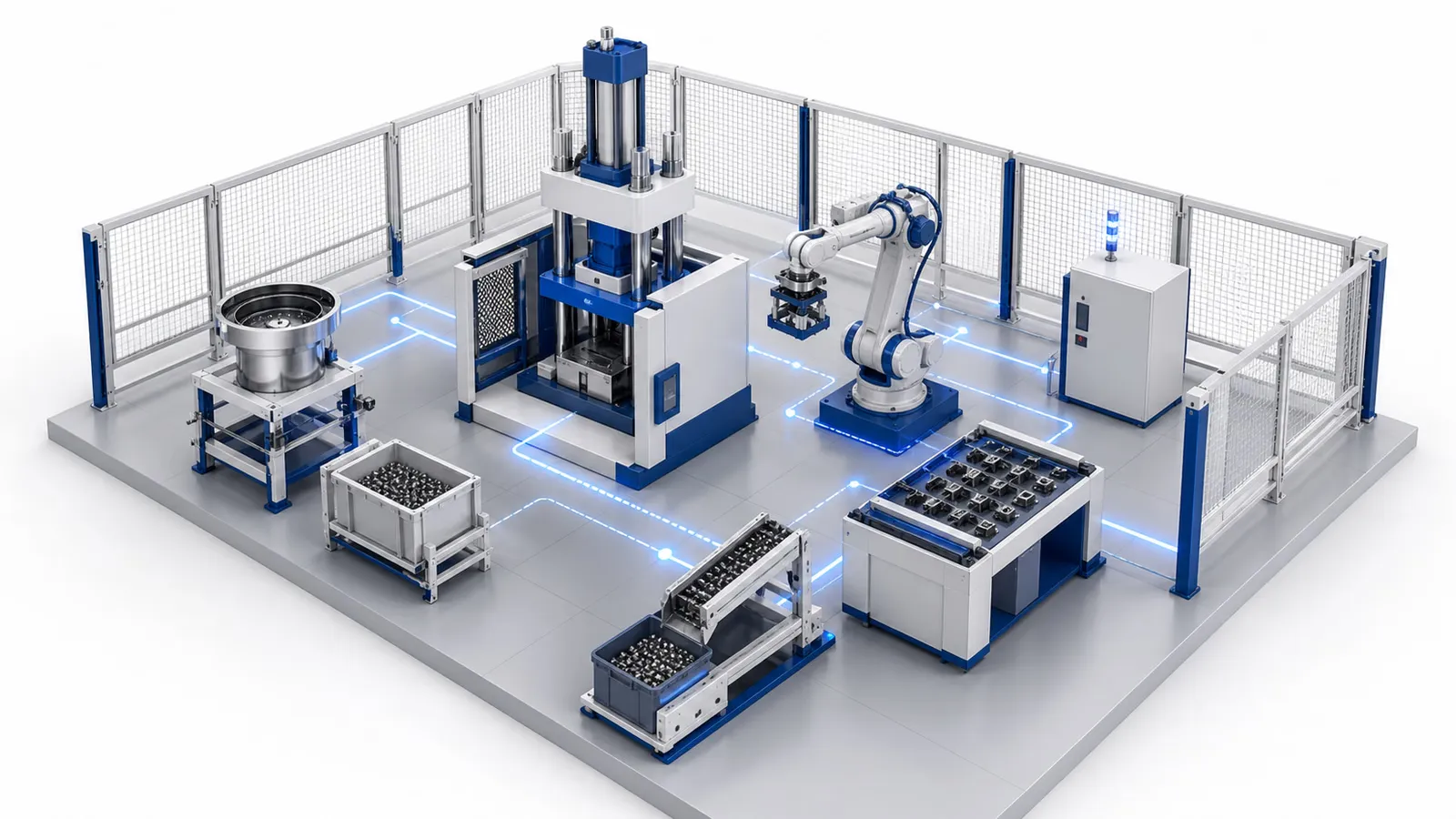
Automation-ready Vertical Molding Machine Selection Guide
Select an automation-ready vertical molding machine by reviewing access, table configuration, I/O planning, part presentation, removal, safety, and workcell workflow.
2026-07-11 | 9 min read | Category: Choose by Production Requirement
Automation-ready machine selection should begin before the robot or fixture is purchased. Access, table position, signals, safety devices, part presentation, and recovery logic all affect whether a vertical molding machine can support a practical workcell.
This guide helps define the machine-side questions without pretending that every automation item belongs to the injection machine. Clear scope boundaries make the project easier to quote, review, and support.
Quick Answer
For automation-ready selection, review loading and unloading points, table configuration, robot access, fixture presentation, part removal, I/O needs, safety concept, alarm recovery, and responsibility boundaries between machine, mold, robot, and auxiliary equipment.
When This Guide Is Most Useful
Use this guide when a project may include robots, pickers, conveyors, fixture carriers, camera checks, auxiliary equipment, or future automation even if initial production starts manually.
Selection Path
Define the automated task
Automation may load inserts, remove parts, move fixtures, check orientation, or collect finished products. Define the task clearly before choosing machine structure or table configuration.
Review physical access
Robots and fixtures need predictable access around the mold and table. Side access, table movement, fixture height, and guarded space should be reviewed early.
Plan signals and responsibility boundaries
Machine I/O, safety interlocks, cycle permission, robot ready signals, alarm handling, and reset steps need clear ownership. Do not assume the machine alone controls the entire cell.
Design for recovery
Real production includes misloads, stuck parts, sensor faults, and operator intervention. Recovery steps should be considered before confirming the automation-ready scope.
Decision Points to Review
| Review point | Why it matters | What to prepare |
|---|---|---|
| Robot or device access | Physical approach determines table and structure suitability. | Robot path, fixture size, and loading position. |
| Part presentation | Automation needs consistent pickup and placement conditions. | Feeding method, orientation, and fixture concept. |
| I/O and sequence | The machine and automation device must exchange clear signals. | Signal list, sequence concept, and alarm handling plan. |
| Safety and guarding | Workcell safety affects access, cycle permission, and reset procedure. | Guarding concept and responsibility boundaries. |
How to Compare Common Options
| Option | When it may fit | What to verify |
|---|---|---|
| Automation-ready manual start | The project starts manual but may add automation later. | Space, I/O reserve, and table access for future changes. |
| Semi-automatic workcell | Assist devices handle part of the loading or removal task. | Device interface, fixture movement, and operator role. |
| Fully automated workcell | Robot or feeder manages repeated loading and unloading. | Sequence, safety, recovery, and integration responsibility. |
Information to Prepare Before Asking for a Recommendation
| Information | Why Deboge needs it |
|---|---|
| Automation task description | It defines what the machine must support. |
| Layout sketch | It shows robot access, operator access, and guarded space. |
| Signal and sequence expectations | They prevent unclear responsibility during integration. |
| Part presentation plan | Automation reliability depends on consistent pickup and placement. |
Common Mistakes to Avoid
- Calling a machine automation-ready without defining the automation task.
- Leaving I/O and signal sequence until after the machine is ordered.
- Forgetting recovery steps for misloads, stuck parts, or alarms.
- Ignoring operator access for setup, maintenance, and troubleshooting.
How This Guide Connects to Other Resources
Use this guide after deciding whether manual, semi-automatic, or automatic loading is realistic. Connect it with machine support pages for controller evidence, safety checks, and maintenance planning once the workcell moves toward production.
Related Reading
- Automation-ready Vertical Molding Machines
- Manual vs Semi-automatic vs Automatic Loading Guide
- Controller Settings
- Safety Guidelines
FAQ
What does automation-ready mean in machine selection?
It means the machine discussion includes access, table layout, signals, safety, part presentation, and future integration needs. The exact scope must be defined for the project.
Does automation-ready mean the robot is included?
Not automatically. Robot, feeder, mold, auxiliary equipment, and machine responsibilities should be defined clearly in the project scope.
Why should recovery steps be reviewed before automation is confirmed?
Misloads, stuck parts, and alarms happen in real production. Recovery planning affects safety, sequence logic, and operator access.
Can automation be planned for a later phase?
Yes. Future automation can be considered during machine selection so access, signals, and layout do not block a later workcell.
Related Reading
Ready to confirm a machine selection?
Send your product details, mold specs, and production requirements. Deboge engineering will review and recommend a specific configuration.