
What Is Power Plug Cord Molding?
Understand power plug cord molding, wire and terminal positioning, insulation overmolding workflow, mold access, and machine review questions.
2026-07-11 | 8 min read | Category: Application-related Concepts
Quick Answer
Power plug cord molding forms plug bodies, cord strain relief, or related insulated sections around wires, terminals, or cord assemblies.
Why should power plug molding be reviewed as a workflow, not only a product category? Start with the workflow, not only the machine name. The term helps a project team discuss the part, material, mold, loading method, removal method, and production target with the same meaning.
Use this page as a concept reference, not as a final machine specification, mold design rule, or processing parameter recommendation.
What Power Plug Cord Molding Means in a Molding Project
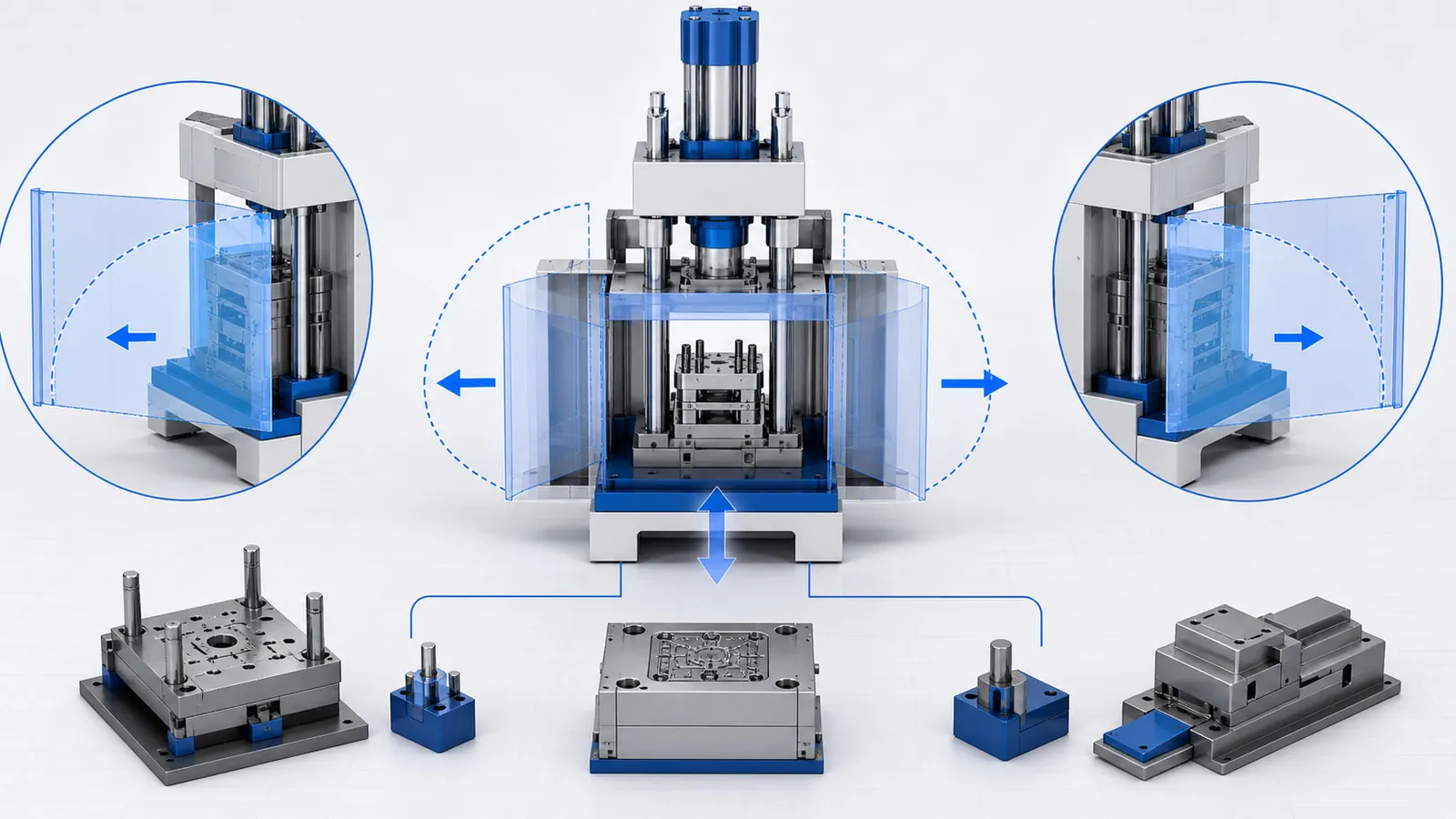
A power plug or cord project may involve wires, terminals, plug pins, strain relief geometry, soft or flexible material, and appearance requirements. The operator must load the cord or terminal assembly correctly before mold close. The mold must hold the assembly without damaging it. The machine must provide practical access for routing, checking, molding, and removal. These projects often sit between cable overmolding, insert molding, and soft material processing, so the machine discussion should connect all three.
For power plug and cord molding, the review should start with cord routing, terminal placement, strain relief geometry, soft material behavior, mold access, and finished part removal. These details decide whether the machine layout can support stable loading and molding.
Why It Matters for Machine Selection
Machine review should consider cable routing, terminal seating, material family, mold access, part removal, safety, and whether production is manual, semi-automatic, or automation-ready.
| Review point | Why it matters |
|---|---|
| Cord routing | Affects side clearance, loading position, and fixture support. |
| Terminal or pin positioning | Needs stable seating before injection and during mold close. |
| Material behavior | PVC, TPE, TPU, or other materials may create different molding and defect questions. |
| Finished part handling | Plug bodies may need cooling, trimming, inspection, or careful removal. |
How to Compare Related Options
The best option depends on the actual part and production method. Use the comparison below as a review map, then confirm the project details with drawings, samples, material information, and mold concept.
| Concept | Practical meaning |
|---|---|
| Simple plug body | May use a direct loading workflow if access is clear. |
| Cord with strain relief | Needs routing support and mold access around the cable path. |
| Multi-component assembly | Requires more careful fixture and loading review. |
| Automated cord project | Needs feeding, orientation, cord management, and guarded cell planning. |
What to Check Before Requesting a Recommendation
Before asking Deboge to recommend a machine structure, collect the information that explains the real production task. Clear project evidence is more useful than a broad keyword.
| Review point | Why it matters |
|---|---|
| Plug or cord sample | Shows cable length, plug shape, terminal details, and molded area. |
| Material family | PVC, TPE, TPU, or other material information if known. |
| Mold and fixture concept | How wires and terminals are held before injection. |
| Production and quality target | Output target, appearance requirements, insulation concerns, and defect examples. |
Common Mistakes to Avoid
- Reviewing only shot size and ignoring cable routing.
- Assuming all plug cord projects use the same material and machine layout.
- Ignoring terminal movement or exposed conductor risk.
- Leaving inspection and trimming workflow out of the machine discussion.
How This Connects to Other Resource Pages
Knowledge Base pages explain the concept. Machine pages show available machine structure directions. Guides help compare options when a project is closer to inquiry. Troubleshooting and material pages help when an existing process already has symptoms.
- Cable Connector Overmolding
- Soft and Flexible Materials
- Power Plug Cord Molding Application
- PVC Material in Cable and Plug Overmolding
FAQ
Is power plug cord molding a type of overmolding?
It is commonly discussed as an overmolding or insert molding workflow because material is molded around wires, terminals, or cord assemblies.
Why is mold access important?
The cord and terminal assembly must be routed and checked before mold close, so poor access can slow production or increase positioning risk.
Can one page confirm the correct material?
No. Material choice depends on product requirements, standards, supplier data, and project validation. The page only frames the discussion.
What should be prepared for Deboge?
Send plug or cord samples, drawings, material information, mold concept, loading method, output target, and defect photos if relevant.
Related Reading
Need technical information specific to your application?
Deboge engineering can answer your machine structure, configuration, and process questions directly.