
PVC Material in Cable and Plug Overmolding
A practical guide to PVC in cable, plug, and flexible part overmolding, including material review, insert handling, and machine configuration notes.
2026-07-11 - 6 min material note - Category: Soft & Flexible Materials
PVC is a flexible thermoplastic material family often discussed for cable overmolding, plug molding, flexible strain reliefs, and wire-related molded parts. The exact PVC grade and product standard matter because flexibility, flame-retardant behavior, and application requirements can vary.
For vertical molding, PVC is often connected to cable and plug products where wires, terminals, or cord assemblies must be positioned before molding.
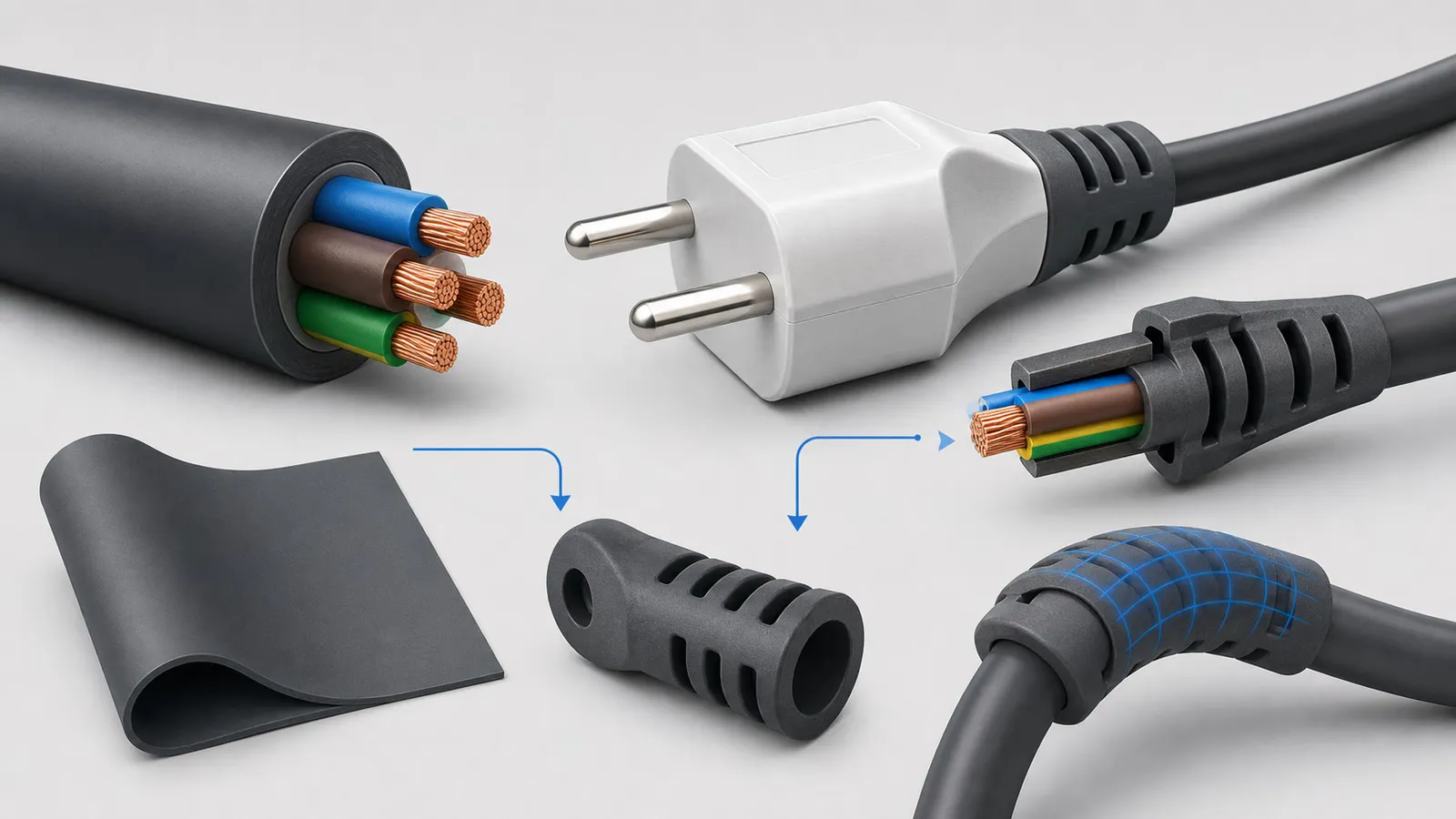
The image above is an illustrative material concept, not a photo of a Deboge machine or a verified customer project.
Typical Applications
PVC is often considered for cable connectors, power plugs, cord strain reliefs, flexible covers, and electrical overmolded parts. Related application pages include Power Plug & Cord Molding and Cable & Connector Overmolding.
Molding Considerations
Review the PVC grade, plasticizer system, product standard, insert or wire positioning method, mold layout, gate position, and temperature guidance from the material supplier. Any compliance or flame-retardant statement must be supported by the selected material grade and project requirements.
Wire or terminal positioning is often the core production issue. The material is only one part of the process; the fixture, mold, and loading workflow must keep the cable assembly stable before injection.
Common Production Challenges
Common PVC challenges include wire displacement, poor filling around terminals, flash, surface marks, material degradation, and handling difficulty with cable assemblies. These issues require review of material, mold, wire fixture design, and machine access.
Machine Configuration Notes
DC Series Tie-bar-less Vertical Clamping Machines may be discussed when cable, wire, or terminal placement benefits from an open working area. DC Series is defined by tie-bar-less vertical clamping; injection direction depends on configuration.
Final machine selection should be confirmed from the PVC grade, cable assembly, mold layout, insert loading method, and production target.
Related Reading
Related Reading
FAQ
Material review questions
Why is PVC common in cable and plug molding?
When does tie-bar-less access help with PVC cable overmolding?
Does PVC automatically meet plug or cable standards?
Need material-specific machine advice?
Send the exact material grade, product drawing, insert or substrate details, mold layout, and production target so Deboge can review the machine configuration discussion.