
Glass-filled Nylon in Insert Molding: Review Points
Review glass-filled nylon molding by checking nylon grade, fiber content, drying, insert loading, wear conditions, and dimensional expectations.
2026-07-12 - 6 min material note - Category: Engineering Plastics
Glass-filled nylon is commonly discussed when a nylon part needs higher stiffness or dimensional performance than an unfilled grade. The material may be PA6, PA66, or another nylon family depending on the supplier and application.
For insert molding, glass-filled nylon review should include drying, flow, fiber orientation, insert seating, mold design, and wear-related machine details.
Typical Applications
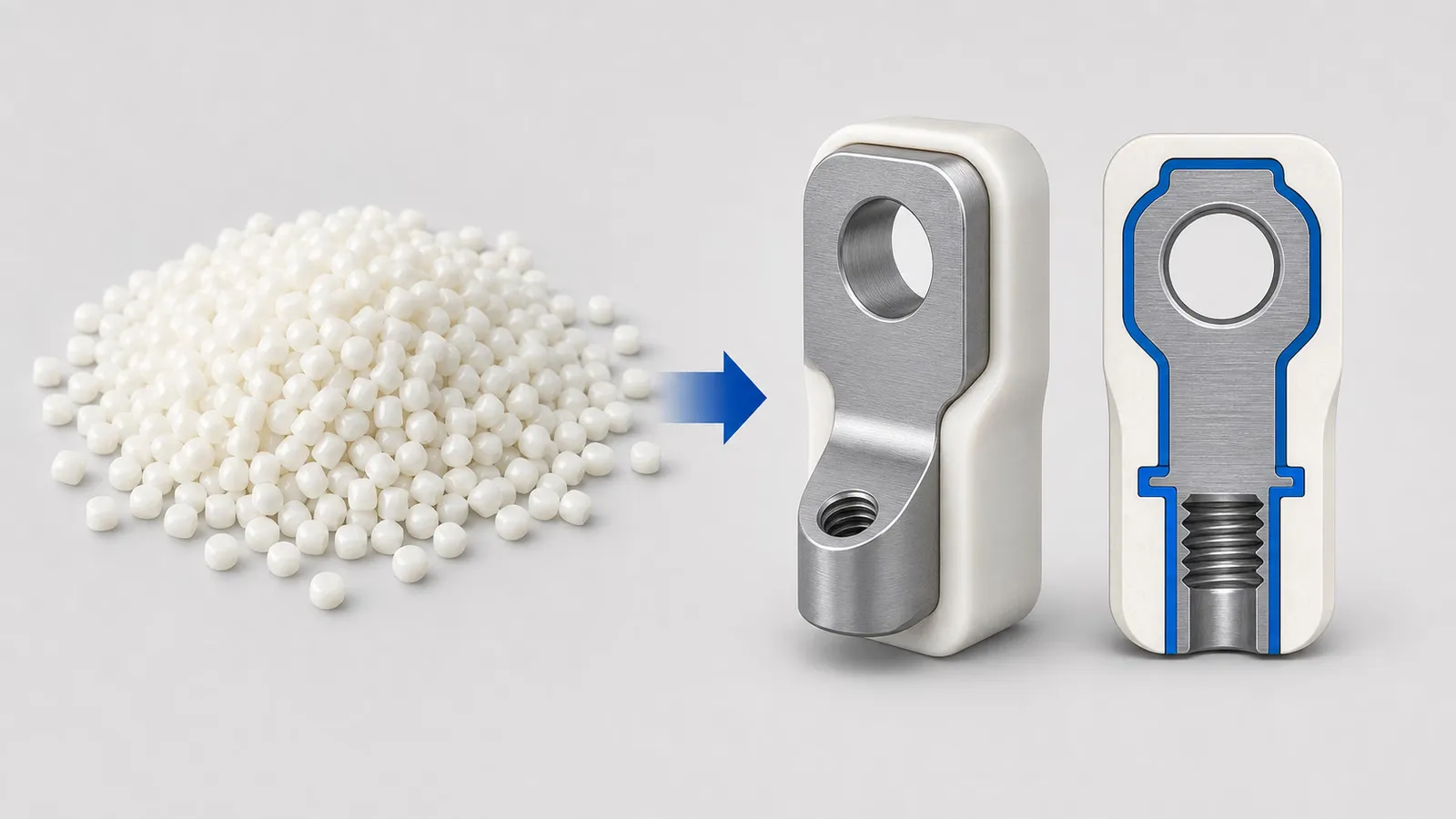
Glass-filled nylon may be considered for automotive components, brackets, housings, mechanical parts, electrical parts, and molded parts with metal inserts. Related application pages include Insert Molding and Automotive Parts.
Molding Considerations
Review:
- Exact nylon base material and glass fiber content.
- Drying and storage guidance from the supplier.
- Gate location, wall thickness, and flow path.
- Warpage and dimensional expectations.
- Insert geometry and fixture support.
- Screw, barrel, and wear-related considerations for filled material.
If the part has tight dimensional expectations, review mold design and inspection plan before selecting the machine structure.
Machine Configuration Notes
DA Series Standard Vertical Injection Molding Machines are a general starting point for vertical insert molding. Rotary table machines may be discussed when insert loading time affects output, but suitability depends on the fixture, mold, and operator or automation workflow.
Final machine review should use the exact material grade, product drawing, mold layout, insert details, and production target.
Related Reading
Related Reading
FAQ
Material review questions
Why does fiber content matter in nylon molding?
Need material-specific machine advice?
Send the exact material grade, product drawing, insert or substrate details, mold layout, and production target so Deboge can review the machine configuration discussion.