
PA66 Material in Vertical Injection and Insert Molding
A practical guide to PA66 for vertical injection and insert molding, including drying review, insert applications, machine notes, and selection cautions.
2026-07-11 - 6 min material note - Category: Engineering Plastics
PA66, often referred to as nylon 66, is an engineering thermoplastic used in mechanical, automotive, electrical, and insert molded parts. It is commonly selected when strength, temperature resistance, and wear performance are important.
For vertical injection molding, PA66 projects should be reviewed with the exact grade and supplier data sheet. Drying, mold temperature, insert design, and part geometry can all affect the machine and process discussion.
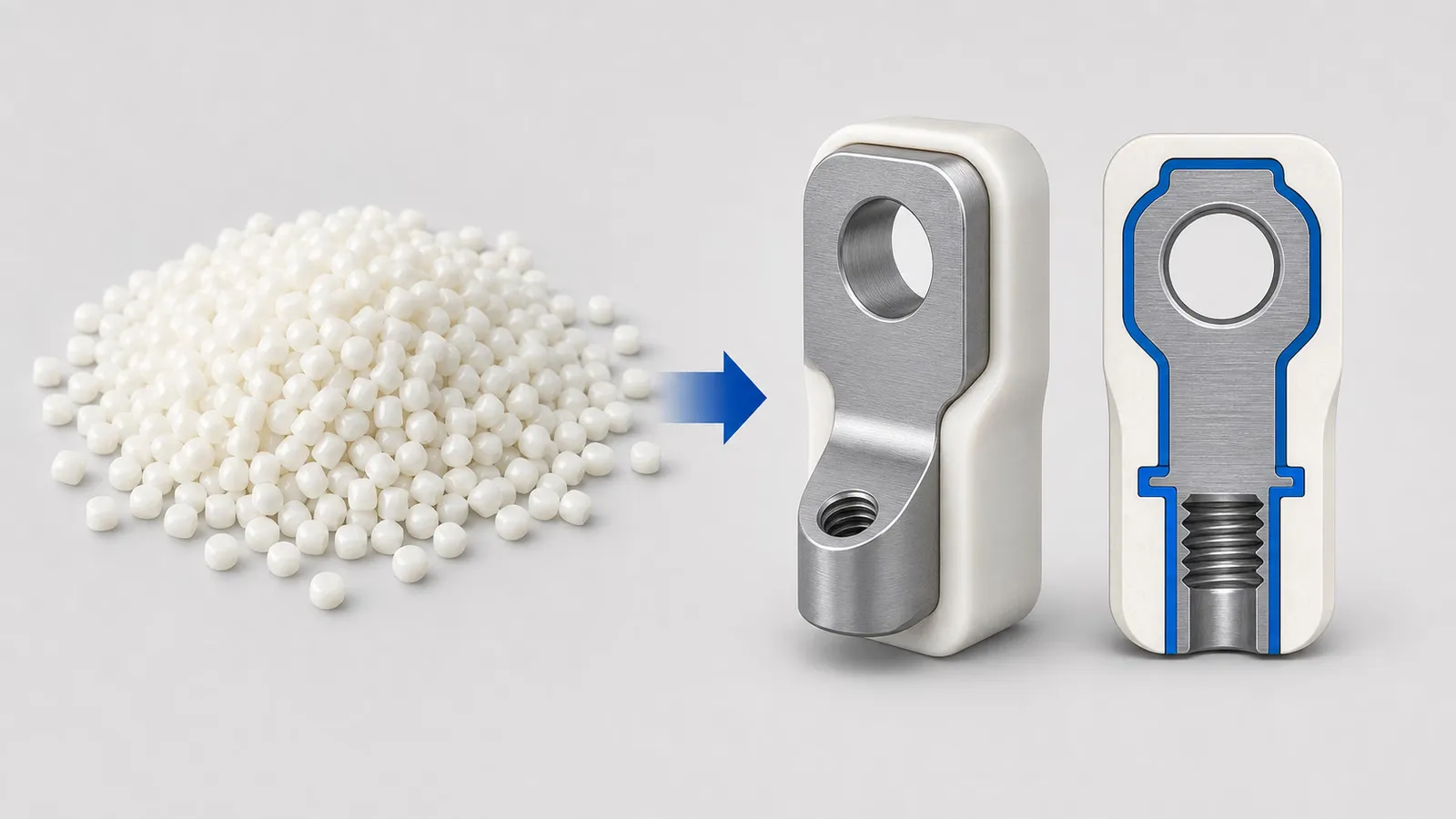
The image above is an illustrative material concept, not a photo of a Deboge machine or a verified customer project.
Typical Applications
PA66 is commonly considered for metal insert molding, automotive components, electrical parts, housings, brackets, and mechanical components. In vertical molding, gravity can help position inserts before injection.
Related applications include Insert Molding and Automotive Parts.
Molding Considerations
Review points include material drying, melt-temperature guidance from the supplier, mold design, insert preheating if required, projected area, and part-removal workflow. Moisture control is especially important because PA66 can absorb moisture before processing.
Glass-filled PA66 grades may need additional review because fiber content can change flow behavior, shrinkage, and wear conditions inside the injection unit.
Common Production Challenges
Common PA66 challenges include moisture-related defects, warpage, sink marks, short shots, insert shift, and dimensional variation. These issues can come from material storage, drying, mold design, gate location, or process stability.
If the project includes metal inserts, the insert retention method should be reviewed together with the material and mold layout. A strong part design is not created by material choice alone.
Machine Configuration Notes
DA Series Standard Vertical Injection Molding Machines are a general starting point for vertical insert molding. Rotary table machines may be discussed when insert loading time is a production bottleneck.
Machine selection should be confirmed from the exact PA66 grade, part size, mold dimensions, insert loading method, and output target.
Related Reading
Related Reading
FAQ
Material review questions
Why does PA66 often need drying review?
Is PA66 suitable for metal insert molding?
What information helps Deboge review a PA66 project?
Need material-specific machine advice?
Send the exact material grade, product drawing, insert or substrate details, mold layout, and production target so Deboge can review the machine configuration discussion.