
PBT Material in Vertical Injection Molding
A practical guide to PBT material for vertical injection molding, including electrical connector applications, insert molding notes, and machine review points.
2026-07-11 - 6 min material note - Category: Engineering Plastics
PBT is an engineering thermoplastic often used in electrical components, connectors, housings, and insert molded parts. It is commonly discussed when dimensional stability and electrical performance are important.
The general material family is not enough for machine selection. Filled grades, flame-retardant grades, connector geometry, terminal placement, and mold layout can change the configuration discussion.
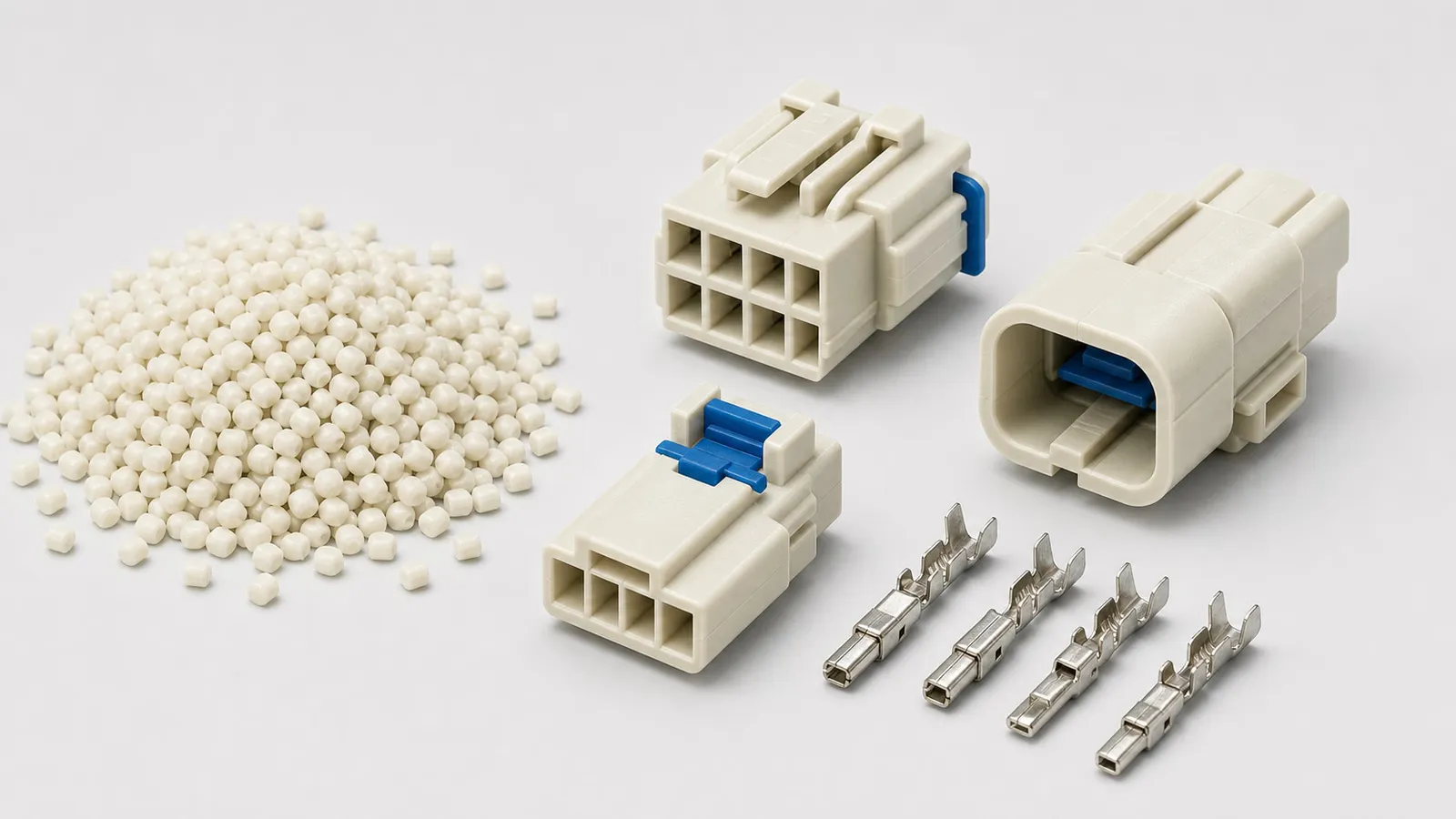
The image above is an illustrative material concept, not a photo of a Deboge machine or a verified customer project.
Typical Applications
PBT is often considered for connector housings, terminal blocks, electrical parts, sensor components, and automotive electrical components. It may overlap with Electronics & Electrical Components and Cable & Connector Overmolding.
Molding Considerations
Review the material grade, drying requirements, insert or terminal loading method, gate position, projected area, and cavity count. Small inserts and terminals require stable positioning before mold close.
If the material grade includes flame-retardant, reinforced, or application-specific properties, those claims should come from the material supplier and project documentation. The website should not treat them as general Deboge machine claims.
Common Production Challenges
Common challenges include insert movement, short shots in thin connector features, moisture-related defects, flash around terminals, and dimensional variation. These issues need material, mold, and machine review together.
Machine Configuration Notes
DC Series Tie-bar-less Vertical Clamping Machines may be discussed when connector or terminal loading needs open-area access. Rotary table machines may fit higher-output insert loading workflows.
DC Series is defined by tie-bar-less vertical clamping. Injection direction depends on configuration.
Related Reading
Related Reading
FAQ
Material review questions
Why is PBT common in electrical components?
When does open mold access matter for PBT connector molding?
Does PBT automatically require a tie-bar-less machine?
Need material-specific machine advice?
Send the exact material grade, product drawing, insert or substrate details, mold layout, and production target so Deboge can review the machine configuration discussion.