
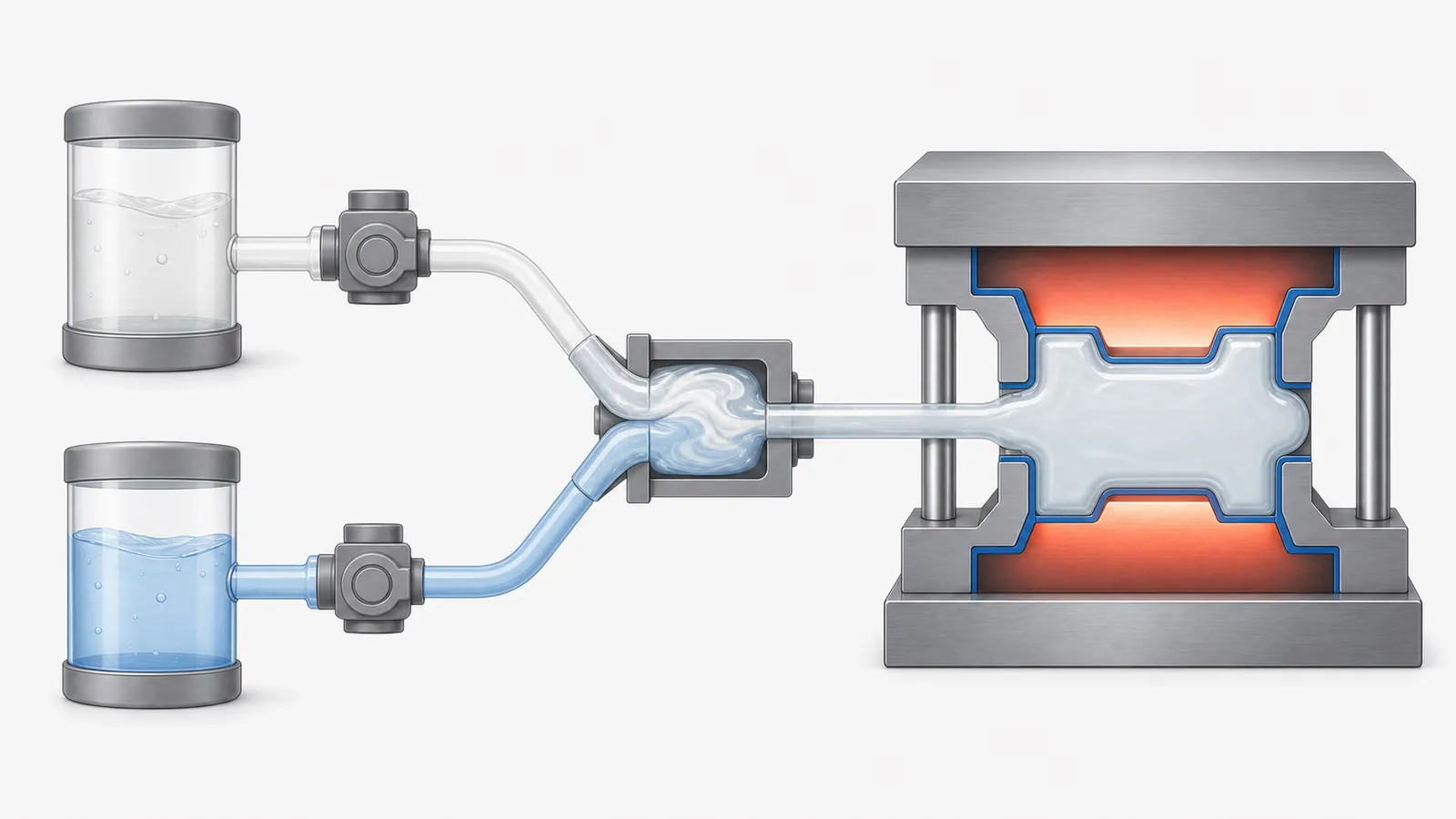
LSR Flash Control: Material, Mold, and Machine Factors
Review LSR flash issues by checking material dosing, mold shutoff, venting, heating balance, injection behavior, and parting-line condition.
2026-07-12 - 6 min material note - Category: LSR / Silicone
LSR flash appears as thin silicone material outside the intended cavity area. Because LSR can flow into very small gaps before curing, mold shutoff condition and process stability are important.
Flash should be reviewed across the full system: material grade, dosing and mixing, mold, heating, clamping, and part removal. Changing one setting without understanding the pattern can create new problems.
What You May See
- Thin flash at the parting line.
- Flash around inserts, gates, vents, or shutoff areas.
- Flash that changes after warm-up or mold cleaning.
- Flash together with incomplete cure, trapped air, or part sticking.
Review Points
Start by marking where the flash appears. If it follows a shutoff surface, inspect mold condition and cleaning. If it changes across all cavities, review dosing, heating, and process stability.
Check:
- Exact LSR grade and supplier processing notes.
- Dosing and mixing consistency.
- Mold shutoff and parting-line condition.
- Venting, gate, and runner condition.
- Mold heating stability.
- Insert or substrate seating if overmolding is involved.
- Clamp movement and table position confirmation if alarms appear.
Machine Configuration Notes
Machine configuration should be reviewed with the dosing system and mold. Open access may help when inserts or substrates must be loaded, but LSR flash control depends heavily on mold shutoff and process stability.
If flash appears together with movement alarms, temperature alarms, or pressure instability, review Troubleshooting Center before continuing repeated production trials.
Related Reading
Related Reading
FAQ
Material review questions
Is LSR flash only a clamping issue?
Need material-specific machine advice?
Send the exact material grade, product drawing, insert or substrate details, mold layout, and production target so Deboge can review the machine configuration discussion.