
LSR Molding Material and Machine Configuration Notes
A practical guide to LSR molding for vertical injection applications, including material handling, dosing, mold review, and machine configuration notes.
2026-07-11 - 6 min material note - Category: LSR / Silicone
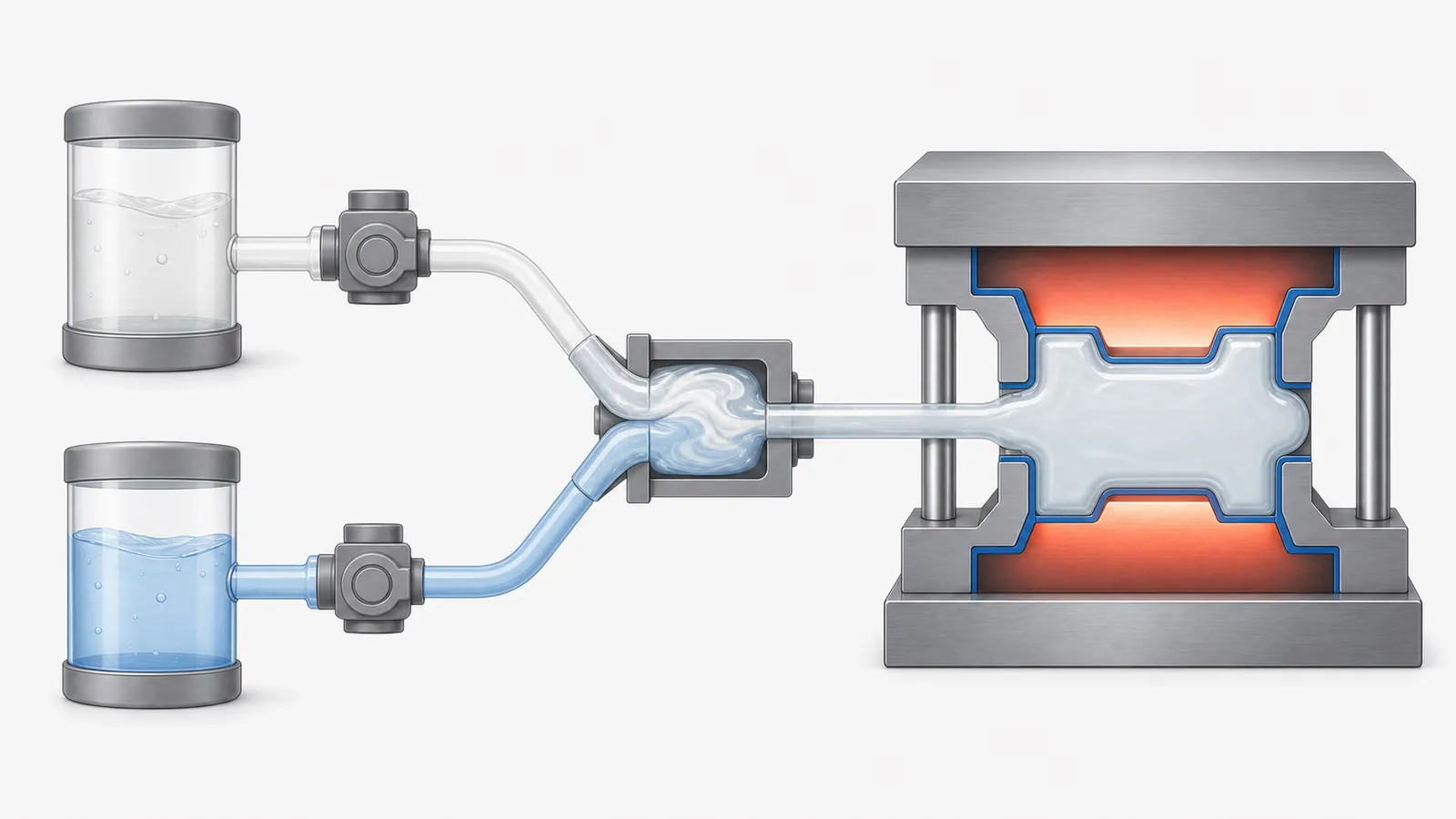
Liquid Silicone Rubber, or LSR, is a two-part silicone material that cures in a heated mold. It is different from standard thermoplastic pellet processing because it requires controlled dosing, mixing, and feeding before injection.
For vertical molding projects, LSR should be reviewed as a complete process: material grade, dosing equipment, injection unit, mold design, heating, part removal, and production target all affect machine selection.
The image above is an illustrative process concept, not a photo of a Deboge machine or a verified customer project.
Typical Applications
LSR is often considered for seals, gaskets, soft components, baby-care products, selected medical components, and silicone overmolding. In vertical molding, the process may be relevant when inserts or substrates need to be placed into the mold before silicone is injected.
Related application pages include LSR / Silicone Molding and Medical Components. Medical or food-contact suitability must be verified from the material grade and product requirements; it should not be assumed from the general word “silicone”.
Molding Considerations
LSR molding requires a dosing and mixing system, matching injection-unit configuration, mold heating, venting, and part-removal planning. The material has different flow and cure behavior from thermoplastics.
Review points include:
- LSR grade and supplier processing recommendations.
- Dosing and mixing equipment requirements.
- Mold heating, gate, runner, and venting design.
- Whether inserts or substrates are loaded before injection.
- Whether flexible parts require manual removal, slide-table access, or automation planning.
Common Production Challenges
Common LSR challenges include incomplete cure, trapped air, flash, inconsistent mixing, part sticking, and difficult part removal. These may come from dosing, mold design, temperature control, material grade, or handling method.
Because LSR often involves auxiliary equipment, machine selection should confirm the full system interface rather than only the clamp structure.
Machine Configuration Notes
DA Series Standard Vertical Injection Molding Machines may be discussed for selected LSR projects when configured for the material and feed system. Slide table machines may help when operators need access for insert loading or careful part removal.
Final suitability depends on the exact LSR grade, dosing equipment, mold design, product geometry, and production requirements.
Related Reading
Related Reading
FAQ
Material review questions
Is LSR processed like standard thermoplastic pellets?
Can LSR be used for medical or food-contact products?
Why might a slide table help with silicone parts?
Need material-specific machine advice?
Send the exact material grade, product drawing, insert or substrate details, mold layout, and production target so Deboge can review the machine configuration discussion.