
Silicone Overmolding: Material and Machine Review Points
Review silicone overmolding projects by checking substrate material, silicone grade, dosing system, mold heating, insert loading, adhesion expectations, and part removal.
2026-07-12 - 6 min material note - Category: LSR / Silicone
Silicone overmolding means silicone is molded over a substrate, insert, or prepared component. The project is not only a silicone material question. Substrate placement, surface condition, mold design, dosing and mixing, heating, and part removal all affect the result.
For vertical molding, the substrate is often placed into the mold before injection. This makes access, fixture support, and repeatable loading important parts of the machine discussion.
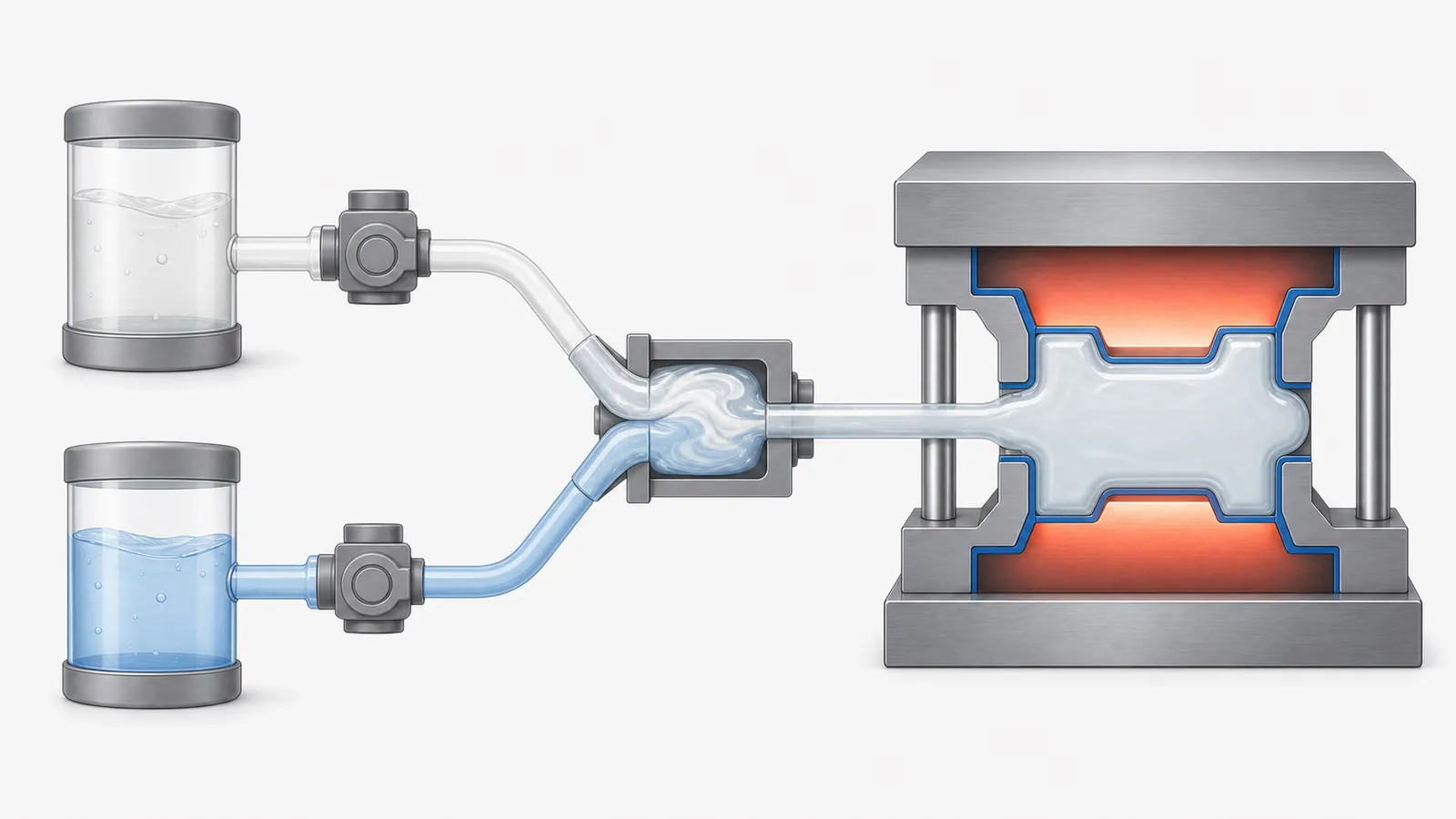
The image above is an illustrative process concept, not a Deboge machine photo or a verified customer project.
Typical Applications
Silicone overmolding may be discussed for seals, soft-touch areas, protective covers, selected medical or consumer components, and parts that combine a rigid substrate with a flexible silicone area.
Medical or food-contact suitability must come from the material grade, product requirement, and target market documentation. It should not be assumed from the word silicone alone.
Review Points
Before machine discussion, collect:
- Exact silicone or LSR grade.
- Substrate material and surface condition.
- Whether adhesion is mechanical, chemical, or only positional.
- Dosing, mixing, and feeding equipment requirements.
- Mold heating, venting, gate, and runner design.
- Loading method, fixture support, and part removal method.
Machine Configuration Notes
DA Series Standard Vertical Injection Molding Machines may be discussed for selected silicone overmolding projects when configured for the material and feed system. Slide table machines may help when substrates are manually loaded or flexible parts require careful removal.
Final suitability depends on the exact silicone grade, dosing system, mold design, substrate, and production workflow.
Related Reading
Related Reading
FAQ
Material review questions
Does silicone automatically bond to a substrate?
Why does machine access matter in silicone overmolding?
Need material-specific machine advice?
Send the exact material grade, product drawing, insert or substrate details, mold layout, and production target so Deboge can review the machine configuration discussion.