
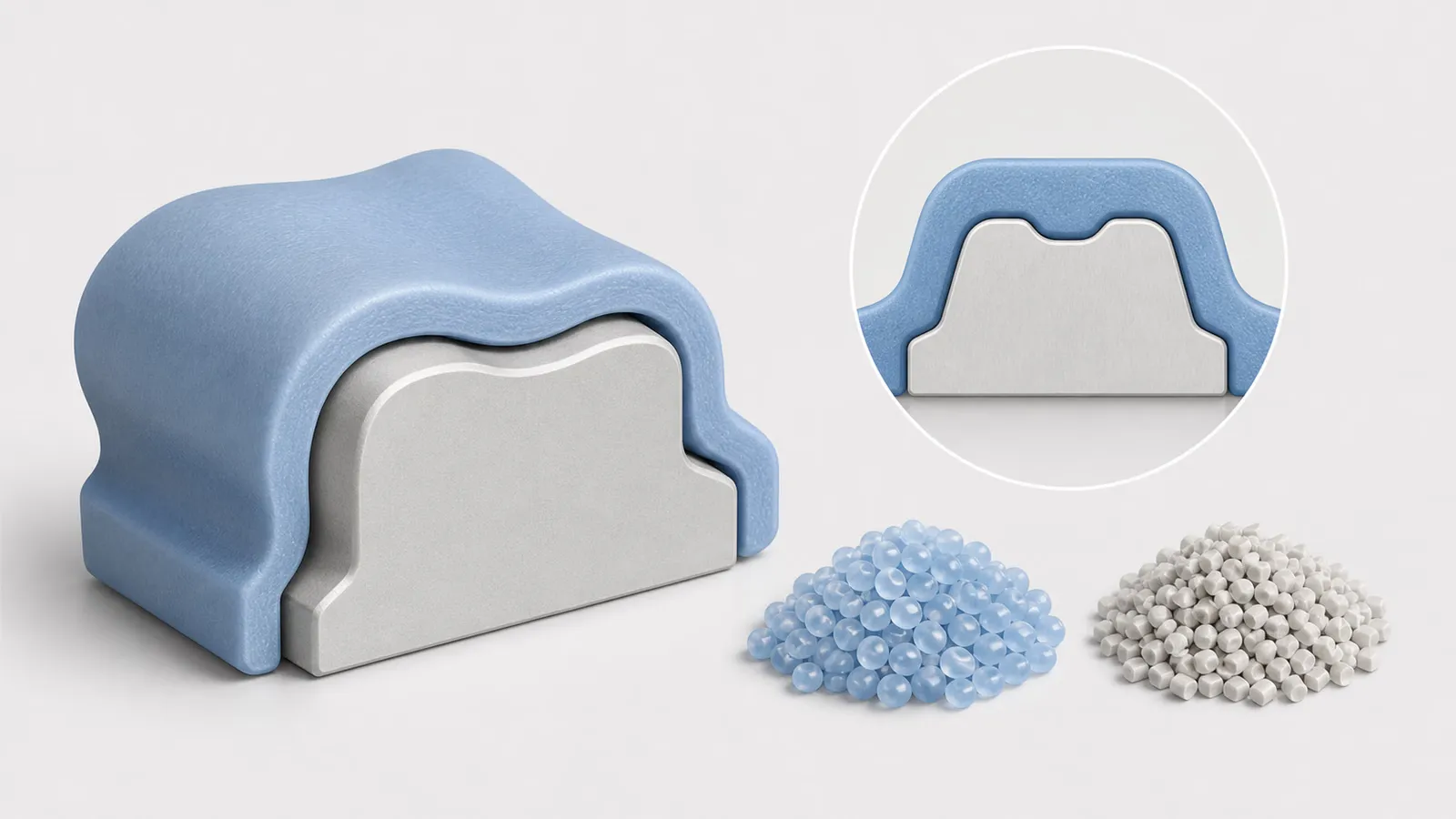
TPE Material in Vertical Overmolding
A practical guide to TPE for vertical overmolding, including substrate review, adhesion considerations, soft-touch applications, and machine notes.
2026-07-11 - 6 min material note - Category: Soft & Flexible Materials
TPE, or thermoplastic elastomer, is a soft and flexible material family often used for overmolding, grips, seals, footwear components, and soft-touch product surfaces. It can be processed like a thermoplastic, but the application often depends on adhesion to a substrate or insert.
For vertical molding, TPE is often discussed when the substrate is loaded into the mold before the soft material is injected.
The image above is an illustrative overmolding concept, not a photo of a Deboge machine or a verified customer project.
Typical Applications
TPE is often considered for soft grips, handles, footwear components, protective covers, seals, and soft-touch overmolded parts. Related application pages include Overmolding and Footwear Components.
Molding Considerations
Review the TPE grade, substrate material, adhesion requirements, gate position, part thickness, insert loading method, and part-removal workflow. If the TPE must bond to another material, the material combination should be confirmed before machine selection.
Substrate placement is often just as important as the soft material itself. If the substrate shifts during mold closing or injection, the final part may show uneven coverage or poor functional fit.
Common Production Challenges
Common TPE challenges include poor adhesion, flash, sink marks, part sticking, surface defects, and inconsistent soft-touch feel. These are affected by material grade, substrate preparation, mold design, process settings, and handling method.
Adhesion should not be assumed from the name “TPE” alone. The exact grade and substrate pairing need review from the material supplier or application testing.
Machine Configuration Notes
DA Series Standard Vertical Injection Molding Machines are a general starting point for vertical overmolding discussions. Slide table machines may help when substrates are manually loaded before molding.
Final machine selection should be confirmed from the TPE grade, substrate, product design, mold layout, and output target.
Related Reading
Related Reading
FAQ
Material review questions
What matters most in TPE overmolding?
Why use a vertical machine for TPE overmolding?
Does TPE always bond to the substrate?
Need material-specific machine advice?
Send the exact material grade, product drawing, insert or substrate details, mold layout, and production target so Deboge can review the machine configuration discussion.