
Bakelite and Phenolic Materials in Vertical Injection Molding
A practical guide to Bakelite and phenolic materials for vertical injection molding, including applications, process considerations, and machine review points.
2026-07-11 - 6 min material note - Category: Thermoset Materials
Bakelite and phenolic materials are thermoset materials used where molded parts need heat resistance, rigidity, and electrical insulation. They cure in a heated mold, so processing requirements are different from standard thermoplastics.
The general material name is not enough for machine selection. The actual grade, filler content, part design, and mold layout determine the configuration discussion.
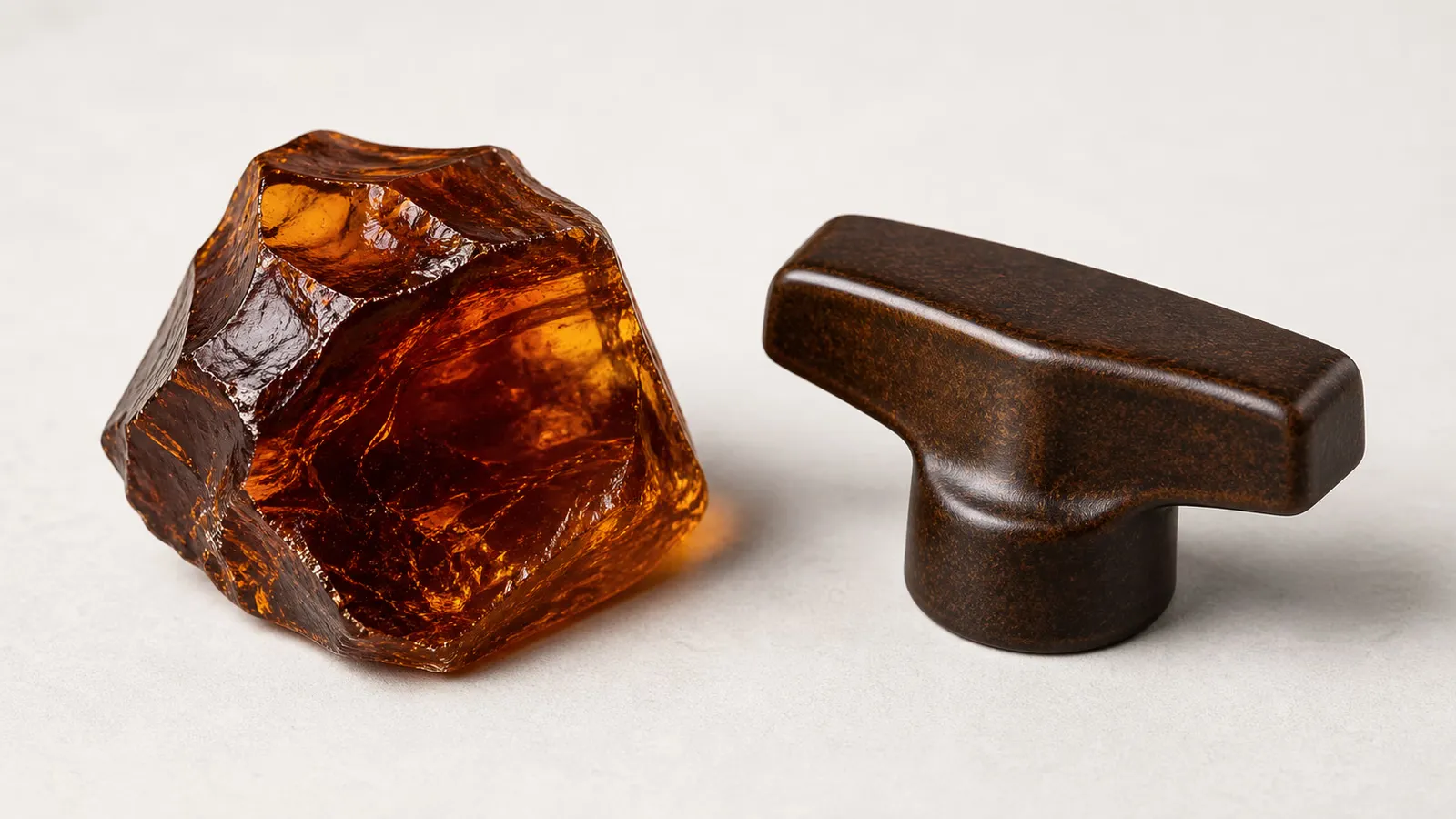
The image above is an illustrative material concept, not a photo of a Deboge machine or a verified customer project.
Typical Applications
Phenolic materials are often considered for cookware handles, knobs, electrical switch components, appliance parts, industrial handles, and heat-resistant molded parts. Some projects involve metal inserts or hardware that must be positioned before molding.
This connects naturally to thermoset molding. It may also overlap with brush molding or other molded handle and grip applications depending on the product structure.
Molding Considerations
Phenolic molding requires stable mold heating, suitable material feeding, controlled residence time, and enough clamping force to prevent flash during the cure stage. Part removal and mold cleaning should also be considered because cured thermoset parts can behave differently from cooled thermoplastic parts.
Review points include:
- Material grade and filler content.
- Mold temperature and cure-time requirements from the material supplier.
- Part geometry and projected area.
- Whether inserts, screws, or metal hardware are loaded before molding.
- Whether the operator needs slide-table access for safer or easier part removal.
Common Production Challenges
Common challenges include flash, incomplete cure, brittle parts, inconsistent fill, and difficulty removing parts from the mold. These issues can come from material, mold, temperature, pressure, or handling conditions, so the machine recommendation should not be made from material name alone.
Machine Configuration Notes
DA Series Standard Vertical Injection Molding Machines are a common starting point for thermoset vertical molding discussions. Slide table machines may help when the lower mold needs to move out for insert loading, part removal, or mold-surface access.
Machine configuration should be confirmed after reviewing the phenolic grade, mold dimensions, projected area, part-removal method, and production target.
Related Reading
Related Reading
FAQ
Material review questions
Are Bakelite and phenolic materials the same thing?
Why are phenolic materials used for heat-resistant parts?
What should be reviewed before choosing a machine?
Need material-specific machine advice?
Send the exact material grade, product drawing, insert or substrate details, mold layout, and production target so Deboge can review the machine configuration discussion.