
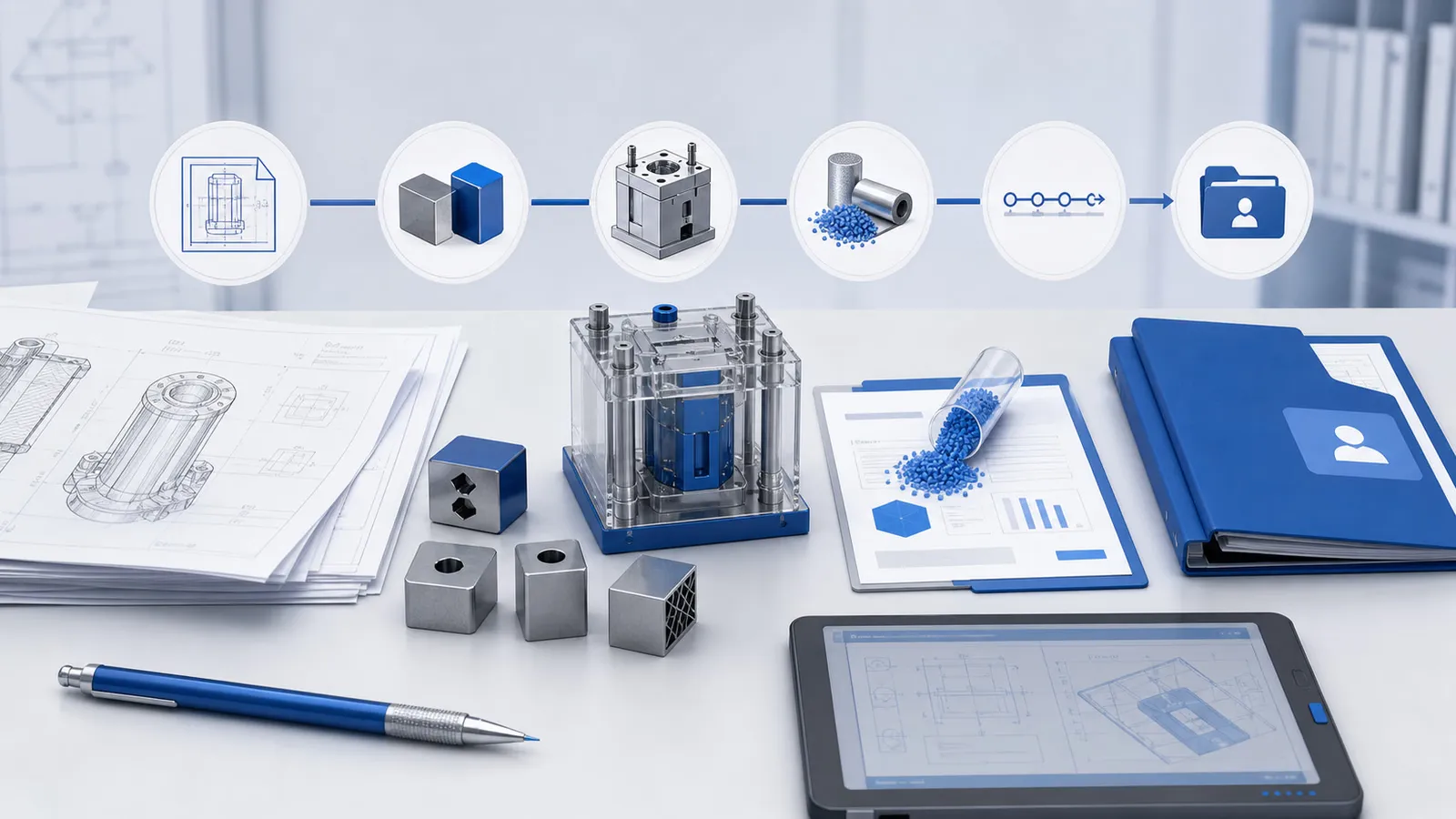
Machine Selection Checklist
Use this checklist to review vertical injection molding machine requirements before comparing configurations, requesting quotes, or confirming a project path.
2026-07-11 | 9 min read | Category: Start Here
A useful machine inquiry is built from clear project facts. Without product drawings, material information, mold assumptions, loading workflow, and production targets, two quotes may look comparable while describing very different machine scopes.
This checklist is designed for teams preparing a project review or supplier discussion. It helps organize the information Deboge needs before recommending a vertical molding machine structure, table configuration, and project review path.
Quick Answer
Before asking for a recommendation, prepare the part information, insert or substrate details, mold concept, material data, loading and removal method, production target, automation plan, and any factory constraints. The better the checklist, the less time is lost comparing incomplete options.
When This Guide Is Most Useful
Use this checklist when a project is moving from concept to supplier discussion, when several departments need to align internally, or when you want to avoid comparing quotes that are based on different assumptions.
Selection Path
Confirm what is already known
Separate confirmed project facts from assumptions. Drawings, material names, mold dimensions, and production plans should be labeled clearly so the machine review does not depend on hidden guesses.
Record the full workflow
Document how parts are loaded, molded, cooled or cured, removed, checked, and collected. The workflow often explains why a fixed platen, slide table, rotary table, or custom configuration may be discussed.
Identify open questions
Some details may not be final yet. That is acceptable if the open items are visible. Deboge can review options more clearly when the team knows which points still require confirmation.
Send a focused review package
A focused package avoids long email loops. Include attachments, target output, special constraints, and the decision you want support with: machine structure, table configuration, automation readiness, or document request.
Decision Points to Review
| Review point | Why it matters | What to prepare |
|---|---|---|
| Part and insert information | The molded geometry and insert placement affect clamp, access, and fixture review. | Drawings, photos, insert samples, and location notes. |
| Mold concept | Mold size, gate direction, and movement clearance affect machine structure. | Mold layout, estimated mold dimensions, and special access needs. |
| Workflow and labor plan | Manual, semi-automatic, and automatic loading lead to different table and safety discussions. | Loading steps, removal steps, staffing, and timing assumptions. |
| Factory constraints | Floor space, power, lifting, and auxiliary equipment can affect project scope. | Layout notes, utility constraints, and equipment already planned. |
How to Compare Common Options
| Option | When it may fit | What to verify |
|---|---|---|
| Early concept checklist | The project is not fully defined yet. | Which facts are confirmed and which need engineering review. |
| Quote-ready checklist | The team is ready to compare machine proposals. | Drawings, mold concept, material, workflow, and target output. |
| Final confirmation checklist | A selected path needs engineering confirmation. | Machine scope, mold data, auxiliary equipment, and installation responsibilities. |
Information to Prepare Before Asking for a Recommendation
| Information | Why Deboge needs it |
|---|---|
| One-page project summary | It gives everyone the same starting point. |
| Attachments and drawings | They reduce misunderstanding caused by text descriptions alone. |
| Selection question | Deboge can respond faster when the main uncertainty is stated directly. |
| Target timing | Delivery, mold trial, and production schedule affect planning discussions. |
Common Mistakes to Avoid
- Asking for the lowest price before the machine scope is clear.
- Comparing proposals that use different assumptions for table configuration or automation.
- Leaving material and mold information out of the first inquiry.
- Treating future automation as an afterthought when it may affect access and signals.
How This Guide Connects to Other Resources
This checklist works with the step-by-step guide and preparation guide. After the checklist is complete, use the structure and application guides to narrow the technical path before asking Deboge for a recommendation.
Related Reading
- Step-by-Step Machine Selection Guide
- What Information to Prepare Before Machine Selection
- Quote Preparation Checklist Download
- Project Information Sheet
FAQ
What information should be included in a machine selection checklist?
Include product drawings, insert or substrate details, material information, mold concept, loading method, removal method, production target, automation plan, and factory constraints.
Can a checklist be used before the mold is finished?
Yes. Mark the mold details as estimates or open questions. Early review can still help identify machine structure and access issues.
Why should loading time be included in the checklist?
Loading time can affect table configuration, cycle planning, operator movement, and whether semi-automatic or automatic handling should be discussed.
Should commercial requirements be sent with the technical checklist?
Target timing and project stage are useful, but technical information should come first so the machine scope is defined correctly.
Related Reading
Ready to confirm a machine selection?
Send your product details, mold specs, and production requirements. Deboge engineering will review and recommend a specific configuration.