
Metal Insert Molding Machine Selection Guide
Select a vertical molding machine for metal insert molding by reviewing insert geometry, fixtures, table workflow, mold access, and removal.
2026-07-11 | 9 min read | Category: Choose by Application
Metal insert molding projects often depend on accurate placement and repeatable handling. Terminals, pins, threaded inserts, brackets, bushings, and stamped parts can all create different fixture and access requirements.
This guide explains how to prepare the machine selection discussion around metal insert geometry, loading repeatability, fixture support, table configuration, mold access, and part removal.
Quick Answer
For metal insert molding, review insert shape, orientation, heat or surface concerns, loading repeatability, fixture design, mold access, and removal method. Table configuration should follow how the insert is loaded and held before mold close.
When This Guide Is Most Useful
Use this guide when the project includes metal components placed into the mold before injection and when repeatable positioning or fixture support is central to production stability.
Selection Path
Define the metal insert
Document the insert material, shape, orientation, critical surfaces, and how it should be exposed or covered after molding. This helps identify fixture and mold access needs.
Review repeatable loading
Metal inserts may be small, sharp, magnetic, heavy, or difficult to orient. The machine selection should consider how operators or automation will place them consistently.
Match table choice to fixture handling
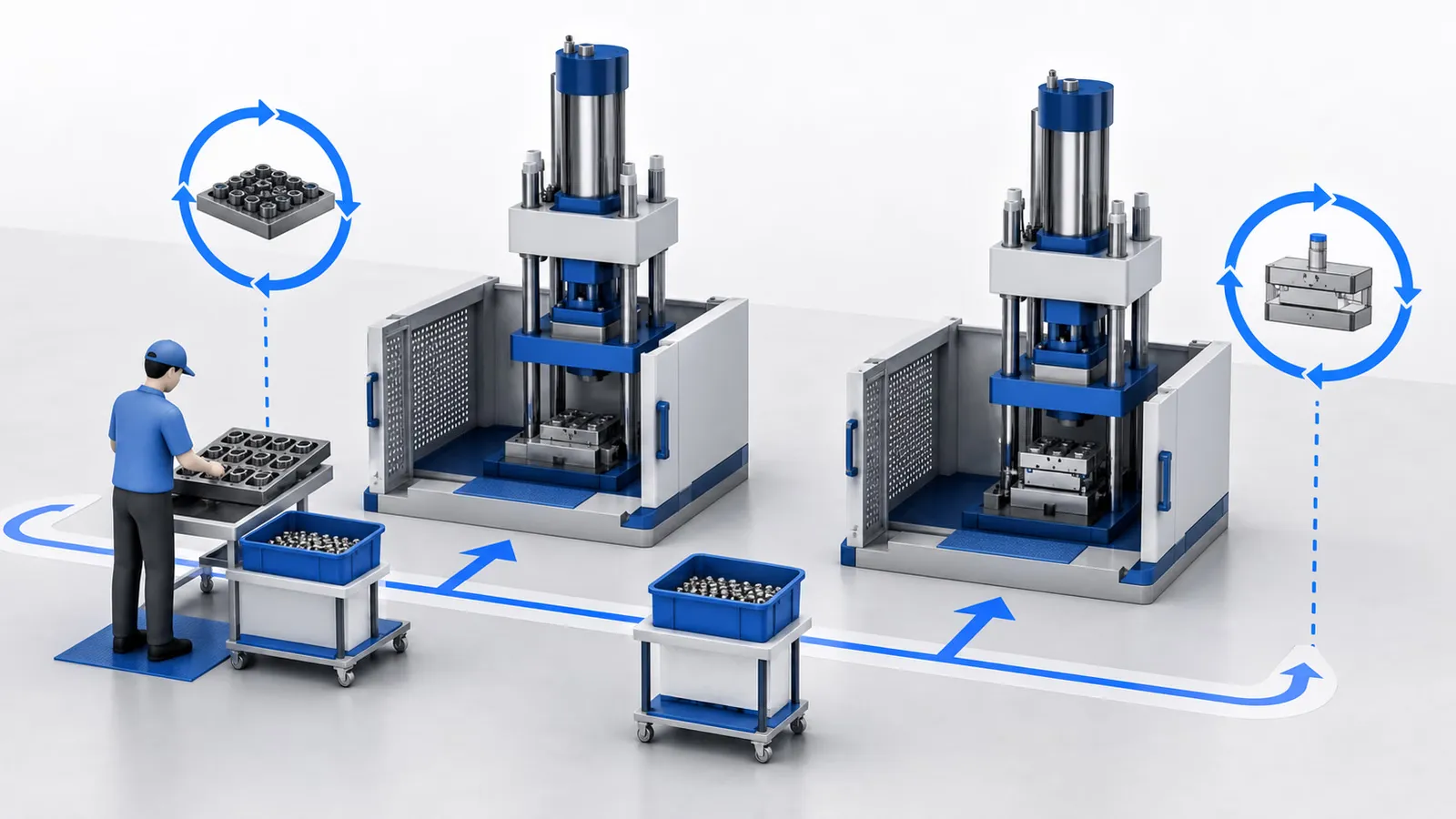
Fixed platen can fit simple manual placement. Slide table can provide clearer outside loading. Rotary table can separate loading and molding stations when repeated handling benefits from rhythm.
Check removal and post-molding handling
The molded part may have exposed metal features, threaded sections, or fragile surfaces. Removal and collection should be reviewed before the table and machine structure are confirmed.
Decision Points to Review
| Review point | Why it matters | What to prepare |
|---|---|---|
| Insert orientation | Incorrect orientation can create scrap or assembly problems. | Drawings, orientation photos, and fixture concept. |
| Fixture support | The insert must stay positioned during mold close and injection. | Fixture drawings, locating points, and loading sequence. |
| Mold access | Operators or robots need clear access to place metal inserts safely. | Mold layout, table direction, and access requirements. |
| Part removal | Exposed metal can affect ejection, handling, and collection. | Removal method and post-molding handling notes. |
How to Compare Common Options
| Option | When it may fit | What to verify |
|---|---|---|
| Fixed platen | Inserts are easy to place and check in the mold area. | Operator reach and safe placement. |
| Slide table | Inserts are easier to load when the lower mold area moves outward. | Fixture stability during movement. |
| Rotary table | Repeated loading and molding stations improve workflow organization. | Indexing sequence and insert holding method. |
Information to Prepare Before Asking for a Recommendation
| Information | Why Deboge needs it |
|---|---|
| Metal insert samples | Real samples show handling difficulty and locating needs. |
| Part drawing | It shows how the insert sits inside the final molded part. |
| Fixture concept | Fixture design often drives table and access decisions. |
| Production target | Volume and labor plan affect manual or automated loading review. |
Common Mistakes to Avoid
- Focusing only on plastic part shape and not on insert handling.
- Ignoring how operators will orient small or similar-looking metal inserts.
- Choosing table configuration before reviewing fixture movement.
- Not checking whether removal can damage exposed metal features.
How This Guide Connects to Other Resources
Use this guide with the insert molding guide and insert loading knowledge page. If loading time becomes the main issue, move to the manual, semi-automatic, and automatic loading guide.
Related Reading
- Metal Insert Molding
- What Is Metal Insert Molding?
- Insert Loading
- Manual vs Semi-automatic vs Automatic Loading Guide
FAQ
What is the main machine selection issue in metal insert molding?
Repeatable insert placement is often the main issue. Fixture support, table access, and removal should be reviewed before choosing the machine path.
Can metal insert molding use fixed platen machines?
Yes, if loading and removal are simple. Slide table or rotary table should be reviewed when access, station separation, or repeatability requires it.
Does the machine determine insert positioning accuracy by itself?
No. Insert positioning depends on the mold, fixture, loading method, operator or automation process, and machine movement together.
What information should be sent for metal insert molding review?
Send part drawings, metal insert drawings or samples, fixture concept, mold assumptions, material information, loading method, and production target.
Related Reading
Ready to confirm a machine selection?
Send your product details, mold specs, and production requirements. Deboge engineering will review and recommend a specific configuration.