
Unstable Cycle Time in Vertical Molding: What to Check
Diagnose unstable cycle time by reviewing insert loading, mold close timing, injection recovery, cooling or curing, part removal, and operator workflow.
2026-07-12 - 8 min diagnostic read - Category: Process Issues
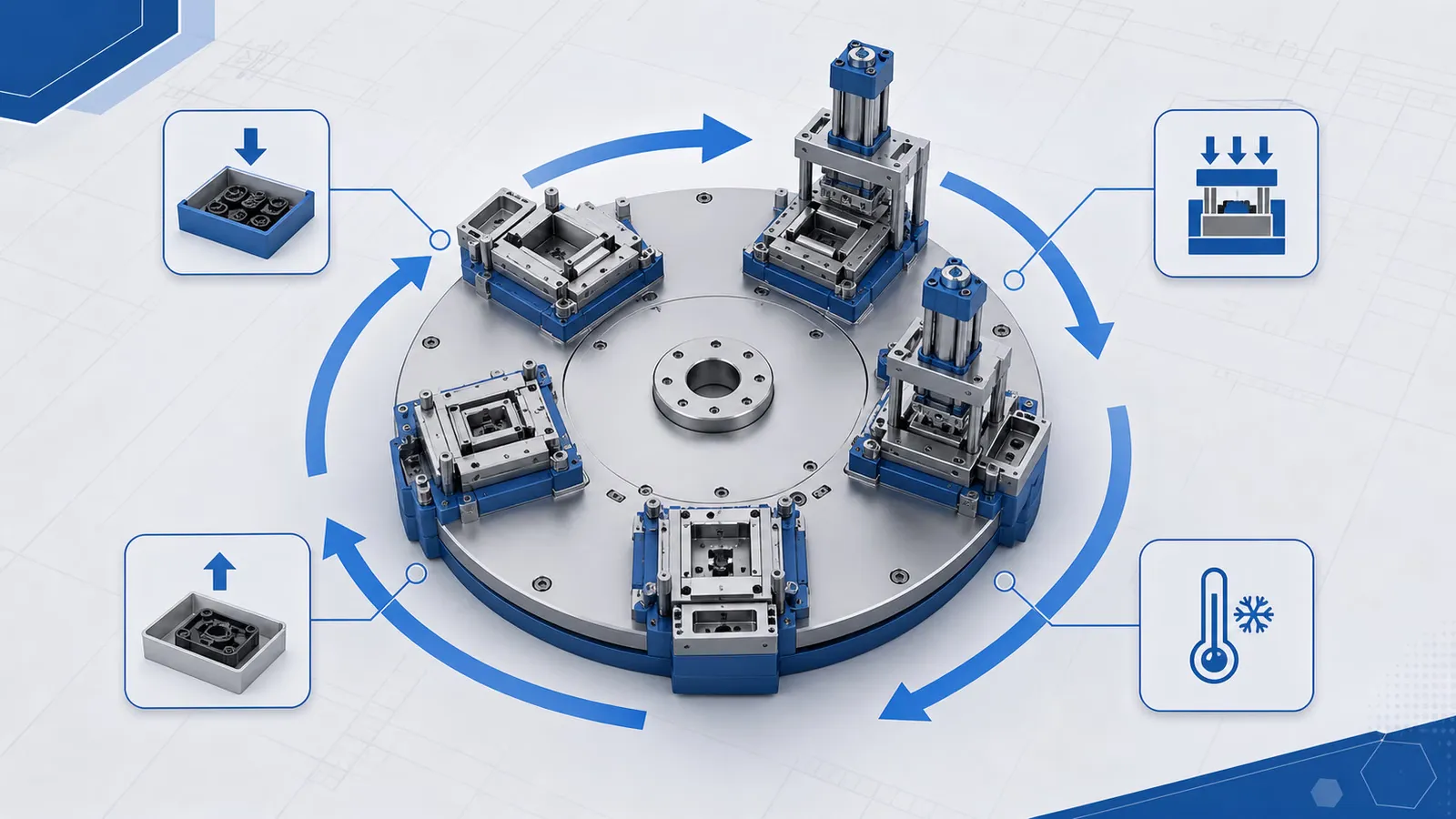
Unstable cycle time means the production rhythm changes even when the part and mold appear the same. In vertical molding, the cause may sit inside the automatic machine sequence, but it may also come from insert loading, part removal, material recovery, cooling or curing, or operator workflow.
Quick Answer
Split the cycle into machine time and human or handling time. Record loading time, mold close, injection, recovery, cooling or curing, table movement, and part removal separately. Once the unstable segment is visible, the diagnosis becomes much clearer.
What You May See
- Cycle time changes from one cycle to the next.
- The operator waits for the machine in some cycles and the machine waits for the operator in others.
- Table movement, mold close, injection recovery, or part removal timing is inconsistent.
- Defect rate increases when the cycle becomes longer or shorter.
- The issue appears after a new insert, fixture, operator, material, or mold setup.
Likely Cause Areas
- Insert loading may vary because of access, orientation, fixture complexity, or preparation flow.
- Part removal may take longer when cooling, sticking, ejection, or inspection steps vary.
- Material recovery or feeding may not finish at the same point in every cycle.
- Cooling or curing time may be changed manually or interrupted by alarms.
- Table movement or station confirmation may pause when a signal is unstable.
- Operator workflow may not match the table configuration or production target.
Safe Checks Before Adjustment
Stop automatic operation if movement, alarm, guarding, or operator safety is uncertain. Do not place hands in the mold, table, injection, or guarded area while movement is possible. Use photos, controller screenshots, cycle logs, and safe observation before changing several settings.
Diagnosis Path
- Measure several cycles and write down the time spent in each visible step.
- Separate automatic machine sequence time from insert loading and part removal time.
- Check whether the longest delay comes before mold close, during recovery, during table movement, or after mold open.
- Record material feeding and recovery behavior during long cycles.
- Review whether one operator side, table station, or fixture position causes more delay.
- Check for alarms, safety device resets, or manual confirmations that interrupt the cycle.
- Compare stable and unstable cycles using the same part, mold, material, and operator setup.
- Discuss table configuration or loading support only after the delay source is documented.
Evidence to Collect
| Check | Why It Matters | Evidence to Collect |
|---|---|---|
| Cycle step timing | The unstable segment identifies the process area to review | Simple cycle log for 20 to 30 cycles |
| Loading and removal time | Manual work often controls vertical molding rhythm | Operator observations and safe workflow video |
| Recovery behavior | Material preparation can delay the next injection | Controller status screenshots and feeding notes |
| Station pattern | One station may point to fixture, table, or sensor cause | Cycle log marked by station or side |
| Alarm interruptions | Small resets can create hidden cycle variation | Alarm history and reset notes |
What Not to Change Too Quickly
- Do not average cycle time before finding which step varies.
- Do not blame machine speed if loading or removal time is the variable segment.
- Do not push operators to load faster if access or fixture design is the real limit.
- Do not ignore safety resets or sensor waits that interrupt the sequence.
When to Contact Deboge
Contact Deboge when the unstable segment relates to table movement, controller sequence, recovery, or machine alarms. Send cycle step timing, machine model, table type, material, fixture photos, and a safe workflow video.
Related Reading
Related Reading
Related Questions
Why does cycle time change even when machine settings are unchanged?
The change may come from insert loading, part removal, material feeding, cooling or curing variation, operator workflow, table movement, or external handling steps.
What is the first measurement to make?
Measure each step separately: loading, mold close, injection, recovery, cooling or curing, table movement, and part removal. The varying step should be reviewed first.
Can table configuration affect cycle stability?
Yes. Fixed platen, slide table, and rotary table workflows place loading and removal work in different positions, so the correct configuration depends on the complete workflow.
When should Deboge review unstable cycle time?
Ask for review when the variation connects to table movement, recovery, alarms, controller sequence, or when the loading workflow does not match the production target.
Need help with this issue?
Send the machine model, material, mold or insert details, defect photos, alarm screenshots, and recent changes. Deboge can review the information and suggest the next diagnostic step.