
Manual, Semi-automatic, and Automatic Loading
Compare manual, semi-automatic, and automatic loading in vertical molding, and learn how automation level affects machine layout, safety, and project planning.
2026-07-11 | 8 min read | Category: Process and Workflow Concepts
Quick Answer
Loading level describes how inserts or substrates reach the mold: by operator, by a mix of operator and devices, or by automated feeding and placement.
How should a factory choose the right loading level? Start with the workflow, not only the machine name. The term helps a project team discuss the part, material, mold, loading method, removal method, and production target with the same meaning.
Use this page as a concept reference, not as a final machine specification, mold design rule, or processing parameter recommendation.
What Manual, Semi-automatic, and Automatic Loading Means in a Molding Project
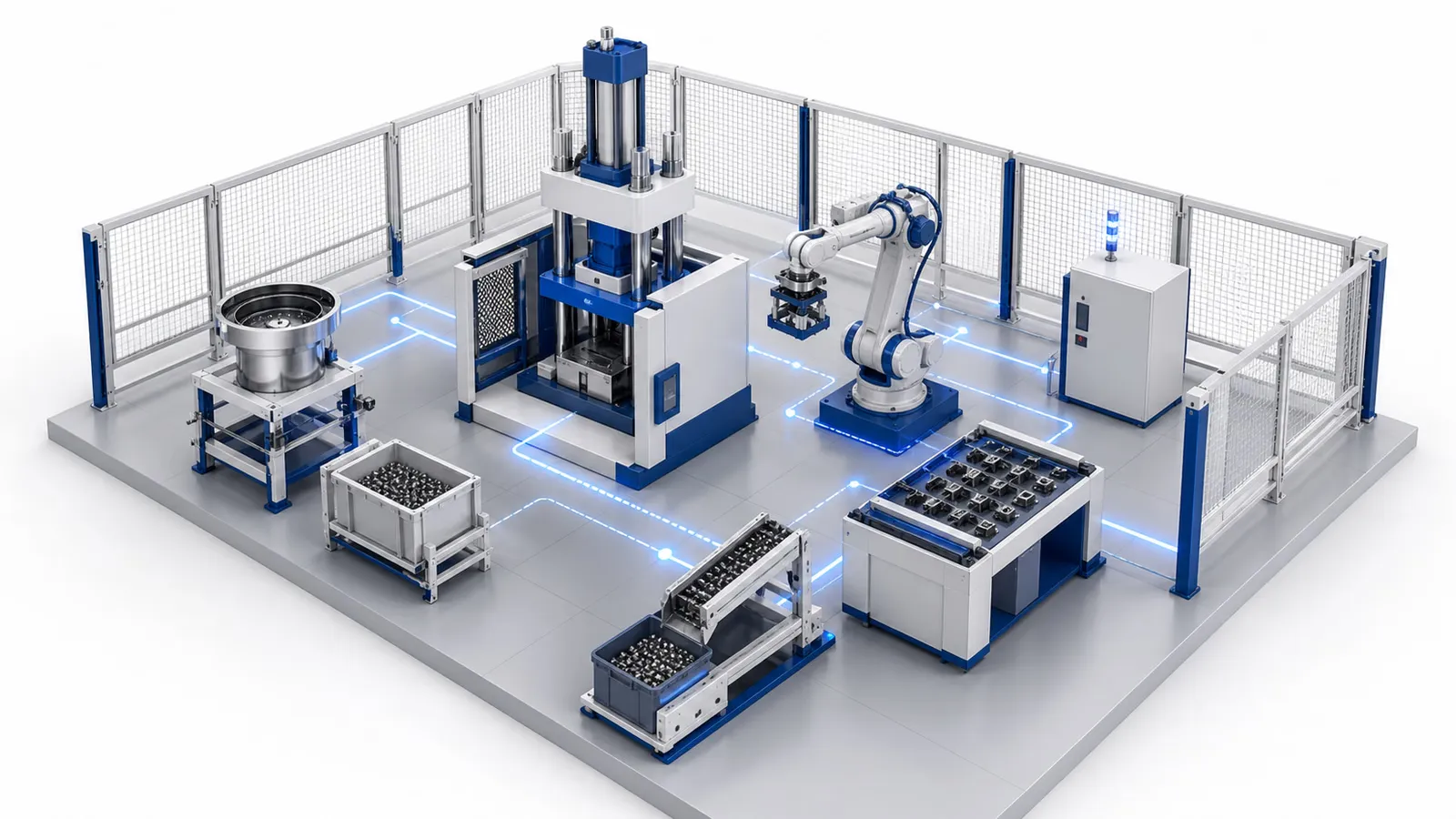
The best loading level depends on product complexity, insert feeding difficulty, output target, operator availability, safety, and future scaling plan. Manual loading can be flexible and practical for many projects. Semi-automatic loading may reduce repeated handling while keeping human judgment in the process. Automatic loading can improve consistency, but it requires early planning for feeding, orientation, robot access, grippers, signals, guarding, and maintenance. Automation should be treated as a workcell decision, not an accessory added after the machine is already fixed.
Use the loading level to define who or what handles the part before and after molding. Manual, semi-automatic, and automatic loading create different needs for access, repeatability, safety devices, signals, fixtures, and maintenance space.
Why It Matters for Machine Selection
Loading level affects table configuration, mold access, safety devices, controller interface, auxiliary equipment, and factory layout. The machine recommendation should match the realistic production stage.
| Review point | Why it matters |
|---|---|
| Product variation | High variation often makes manual or semi-automatic loading more practical at first. |
| Insert feeding difficulty | Small, flexible, tangled, or orientation-sensitive inserts can be hard to automate. |
| Output target | Higher repeat volume may justify fixture or automation planning. |
| Safety and responsibility | Defines what the operator does and what the machine or external equipment controls. |
How to Compare Related Options
The best option depends on the actual part and production method. Use the comparison below as a review map, then confirm the project details with drawings, samples, material information, and mold concept.
| Concept | Practical meaning |
|---|---|
| Manual loading | Flexible, lower setup complexity, depends on operator consistency. |
| Semi-automatic loading | Combines manual steps with fixtures, feeding, or assisted movement. |
| Automatic loading | Requires integrated feeding, placement, removal, signals, and guarding. |
| Automation-ready machine | Keeps space and interface planning open even if automation is added later. |
What to Check Before Requesting a Recommendation
Before asking Deboge to recommend a machine structure, collect the information that explains the real production task. Clear project evidence is more useful than a broad keyword.
| Review point | Why it matters |
|---|---|
| Insert supply method | Tray, bowl, bulk, pre-assembled, manual staging, or upstream process. |
| Loading sequence | Which steps need human judgment and which may be assisted. |
| Output and labor plan | Target output, number of operators, shifts, and scaling plan. |
| Automation boundary | Feeding, placement, removal, inspection, packing, signals, and guarding scope. |
Common Mistakes to Avoid
- Automating before insert feeding and orientation are understood.
- Choosing manual loading without checking operator fatigue and cycle target.
- Planning robots after the machine layout blocks the approach path.
- Ignoring maintenance access once guards and auxiliary equipment are installed.
How This Connects to Other Resource Pages
Knowledge Base pages explain the concept. Machine pages show available machine structure directions. Guides help compare options when a project is closer to inquiry. Troubleshooting and material pages help when an existing process already has symptoms.
- Insert Loading
- Cycle Time vs Loading Time
- Automation-ready Vertical Molding Machines
- Manual Semi-automatic Automatic Loading Guide
FAQ
Is automatic loading always better?
No. It is useful when the product, insert feeding method, output target, and factory layout support reliable automation.
When is semi-automatic loading a good choice?
It can be useful when manual judgment is still needed but repeated positioning, staging, or movement can be assisted.
What should be planned before automation?
Plan feeding, orientation, robot approach, gripper concept, removal, signals, guarding, maintenance access, and operator responsibility.
Can a project start manual and later add automation?
Sometimes, but the machine and mold layout should reserve access, interface, and guarding space from the beginning.
Related Reading
Need technical information specific to your application?
Deboge engineering can answer your machine structure, configuration, and process questions directly.